
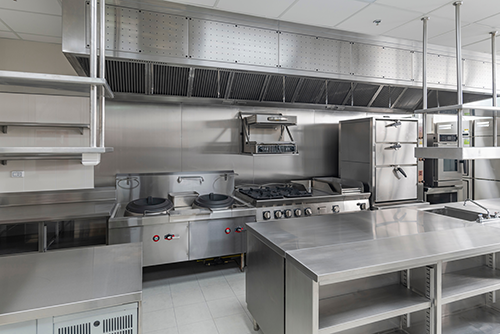

An effective industrial kitchen requires careful planning and attention to detail to ensure smooth operations. It must allow staff to move easily between stations, minimize unnecessary steps, and reduce obstacles.
The essential features that make an industrial kitchen more efficient, from the arrangement of workstations to the selection of appliances, contribute to its overall functionality. With durability, efficiency, and hygiene in mind, a well-designed kitchen supports consistent food preparation, enhances productivity, and improves overall service quality while maintaining safety standards.
Optimize Workflow with Strategic Layout
The physical layout of a kitchen dictates its workflow. An effective design minimizes unnecessary movement and creates clear paths for staff. The classic kitchen brigade system works best with distinct stations for different tasks, such as prep, cook, and plate.
A logical flow from raw material receipt to final dish delivery prevents bottlenecks and cross-contamination. Consider an assembly-line model where each station adds its component to the dish as it moves toward the service area. This method ensures every team member can focus on their specific role without obstruction.
Select Durable and Hygienic Surfaces
Surfaces in a commercial kitchen endure constant use and harsh cleaning protocols. Stainless steel remains the top choice for countertops, shelves, and the exteriors of equipment. Its non-porous nature resists bacteria and makes sanitation simple.
Epoxy floors offer a seamless, slip-resistant surface that withstands heavy foot traffic and chemical spills. These materials improve safety and reduce the time staff must allocate to deep clean routines, which allows more focus on food preparation.
Manage Ventilation and Temperature Control
Proper ventilation systems remove heat, steam, and airborne grease, which creates a safer and more pleasant atmosphere. They also improve air quality and prevent the transfer of odors.
Refrigeration units must maintain consistent temperatures to preserve food quality and prevent spoilage. Learning the clear signs your walk-in cooler needs a new gasket will help you maintain efficiency and avoid costly food waste.
Invest in High-Performance Equipment
Modern commercial kitchen equipment offers significant gains in speed and consistency. Combination ovens can steam, roast, and bake in a single unit, which saves space and reduces cook times. High-capacity dishwashers clean and sanitize large volumes of tableware in minutes.
Choose appliances that match your menu’s demands and production volume. The right tools empower your staff to produce high-quality food with greater consistency and less effort.
Implement Smart Maintenance Routines
A regular schedule for equipment checks, cleaning tasks, and maintenance ensures every component functions at its optimal level. Smart technology now provides alerts for maintenance needs and monitors energy use.
Advanced inventory systems track stock levels in real-time to automate purchase orders and minimize waste. These systems provide valuable data that helps you make informed decisions about resource allocation and operational improvements.
To create a more efficient industrial kitchen, a manager must view the entire operation as a cohesive system. A strategic layout, durable surfaces, high-
performance equipment, precise climate control, and smart maintenance all work together to create an effective environment.