
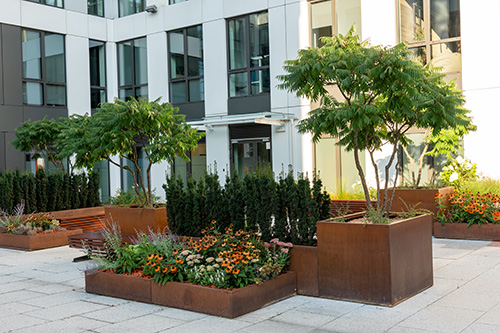

Better landscaping results don’t happen by chance. They come from clear guidelines that dictate how to take care of the property. For hotels, resorts, and other lodging facilities, those decisions directly affect the overall impression guests get when they arrive. To ensure you achieve this for your establishment, we’re here to look at the specific management priorities that improve overall landscaping results.
Prioritizing Clear Planning and Site-Specific Strategy
Strong results start with a tailored plan that fits the property rather than a generic maintenance routine. The hotel entrance, pool deck, event lawn, and pedestrian walkway all serve different purposes, so they require distinct landscaping decisions and service schedules. When you match your strategy to traffic patterns, climate conditions, and guest expectations, you reduce waste and make the landscape work harder for the property.
Focusing on Soil Health and Plant Performance
If you want landscapes to stay attractive without constant replacement, you have to manage what’s happening below the surface. Healthy soil supports stronger root systems, helps plants use water more effectively, and reduces the need for reactive fixes that drive up labor and material costs. For lodging operators focused on sustainable design, soil health becomes a practical management priority, not just a horticultural detail.
Managing Water Use With Precision
Water management deserves close attention because it affects both sustainability targets and day-to-day operating costs. Overwatering can weaken plant material and cause runoff issues, while inconsistent coverage can leave high-visibility areas looking stressed. When you fine-tune irrigation schedules, check system performance regularly, and adjust for seasonal demands, you protect curb appeal without using more water than the site actually needs.
Strengthening Crew Performance and Quality Control
Even the best maintenance plan that boosts landscaping results can fall short if crews don’t execute it consistently. Clear standards, practical training, and strong communication help teams spot issues early and maintain the details guests notice right away, from clean edges to safe walkways. In lodging environments, where appearance and reliability matter every day, better crew performance supports both brand image and smoother operations.
Staying Proactive With Maintenance and Problem Prevention
Reactive landscaping usually costs more because small issues become visible problems before anyone steps in. A proactive approach helps you catch irrigation failures, weed pressure, and worn-out areas before they affect guest experience or create larger maintenance demands. It also creates room to improve efficiency across the program, which is why it makes sense to explore strategies that can make your vegetation program more efficient as part of a broader management plan for sustainable facility operations.