

Most SaaS teams are doing marketing. They publish blogs. They run paid campaigns. They update landing pages. They post on LinkedIn. They track traffic, rankings, clicks and sometimes demo requests.
But activity is not the same as strategy. A lot of the time, the work is happening in separate pieces. Content is separate from product. SEO is separate from conversion. Paid is separate from organic. Brand is separate from demand. Then leadership looks at the numbers and realizes that it’s not turning into more pipeline.
That is where strategic marketing matters.
Strategic marketing is not just planning campaigns. It is the process of connecting positioning, audience intent, channel strategy, content, conversion paths, and measurement around business growth. For SaaS companies, that means marketing should not only create visibility. It should help the right buyers understand the product, trust the brand and move toward a signup, trial, demo, or purchase.
What Is Strategic Marketing?
Strategic marketing is the planning layer behind your marketing activity. It helps a company decide who it should reach, what market it should compete in, what problems it should be known for, and how marketing should support revenue.
Strategic marketing connects what you do in marketing to what the business actually needs to grow.
For a SaaS company, this can include decisions like:
- Which audience segment should we prioritize?
- Which use cases should we build content around?
- Which search terms actually matter for pipeline?
- Which pages should support demo or trial conversion?
- Which channels can create compounding growth?
- How do we measure if organic is helping the business?
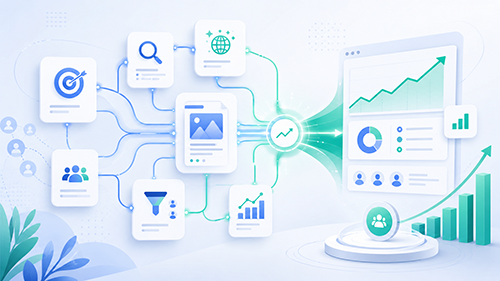
Without this layer, marketing becomes a collection of tasks. With it, marketing becomes a system.
Strategic Marketing vs Marketing Tactics
This is where many teams get stuck. Marketing tactics are the actions. Strategic marketing is the reason behind the actions. Publishing blog posts is a tactic. Deciding which buyer problems your content should own is strategic marketing. Running paid ads is a tactic. Understanding where paid should support SEO, retargetin, or high-intent demand is strategic marketing. Building backlinks is a tactic.
Knowing which pages need authority because they support revenue is strategic marketing. Tactics matter but they only work properly when they are connected to a clear strategy. Otherwise, the team can stay busy for months without creating meaningful growth.
That is usually when you see things like:
- Traffic increasing but conversions staying flat
- Blog content ranking for low-value keywords
- Product pages not getting enough organic visibility
- Paid acquisition becoming too expensive
- SEO reports looking fine, but pipeline not moving
- AI tools mentioning competitors instead of your brand
The problem is not always effort. Most teams are working hard. The problem is that the work is not connected.
Why Strategic Marketing Matters More for SaaS
SaaS buyers do not usually convert after one touchpoint. They search for the problem. They compare tools. They read reviews. They ask peers. They check pricing. They look at alternatives. They visit the website more than once. And now, they also ask AI tools for recommendations. That makes strategic marketing more important. If your marketing is only focused on traffic, you may miss the full buying journey.
A SaaS company does not just need more visitors. It needs the right people landing on the right pages, understanding the product faster, and seeing enough trust signals to take the next step. This is why SEO cannot sit alone as “blog production.”
For SaaS, SEO should connect to:
- Positioning
- Product pages
- Use cases
- Content architecture
- Internal linking
- Technical SEO
- Authority
- AI visibility
- Conversion paths
- Activation and pipeline measurement
When these parts work together, organic growth becomes much stronger. When they are disconnected, you get content that exists but does not rank, traffic that does not convert and reports that do not explain what is actually driving growth.
The Core Elements of a Strategic Marketing System
A strong strategic marketing system is not built from one campaign. It is built from connected parts that support each other.
Clear Positioning
Positioning is the foundation. Before a SaaS company can scale SEO, content, or GEO, the site needs to clearly explain what the product is, who it is for, what problem it solves, and why it is worth choosing.
Weak positioning creates weak marketing.
If your website does not clearly communicate your category, use cases, and buyer pain points, search engines and AI systems also have less clarity about your brand. For SaaS, positioning should show up across:
- Homepage messaging
- Product pages
- Use case pages
- Comparison pages
- Blog content
- Metadata
- Schema
- Third-party profiles
- Community mentions
Your brand should be easy to understand, not only for buyers, but also for search and AI systems.
Audience and Intent Mapping
Strategic marketing should start with real buyer intent. Not every keyword deserves a page. Not every topic deserves a blog post. The goal is to understand what your buyers are searching at each stage of the journey.
For SaaS, this usually includes:
- Problem-aware searches
- Solution-aware searches
- Use case searches
- Alternative and comparison searches
- Integration searches
- Pricing searches
- Demo or trial-intent searches
This matters because many SaaS teams publish too much top-of-funnel content and not enough content that supports evaluation and conversion. A good strategic marketing system maps content to intent. It helps you decide which pages should educate, which pages should compare, which pages should sell, and which pages should move users closer to a signup or demo.
SEO and Content Architecture
Content should not be random. A SaaS website needs structure.
This usually means building a clear content system of product pages, use case pages, comparison pages, educational content, and supporting topic clusters.
Each page should have a role. Some pages should attract high-intent buyers. Some should explain complex problems. Some should support internal links. Some should build topical authority. Some should help AI systems understand your brand better.
The issue I often see is that teams publish content without thinking about how the pages connect. A blog post goes live, but it does not link to the right product page. A use case page exists, but no supporting content points to it. A product page is important for revenue, but it is not optimized for search. This is where content becomes a sunk cost.
Strategic marketing fixes this by turning content into an architecture.
GEO and AI Visibility
AI visibility is now part of the SaaS discovery path. Buyers are asking tools like ChatGPT, Gemini and Perplexity questions such as:
- What is the best software for this use case?
- Which tools should I compare?
- What are the top platforms for this problem?
- What are the alternatives to this product?
If your brand is not mentioned, you may lose consideration before the buyer ever visits Google. That is why GEO should be part of strategic marketing. It is not separate from SEO. It is an added layer. SEO helps your brand get discovered in search. GEO helps your brand become clearer and more recommendable in AI-generated answers.
For SaaS companies, this means building stronger entity clarity, consistent messaging, useful content, third-party mentions, and category authority. AI systems need to understand what your brand does, who it serves, and why it is relevant.
Conversion Path Design
Strategic marketing should not stop at visibility. A page can rank and still fail if the next step is unclear. This is especially common with SaaS content. The blog may bring traffic, but the page does not guide the reader anywhere useful. There is no relevant product link, no use case path, no comparison page, no soft CTA, and no reason to move deeper into the site.
Good conversion path design connects content to business action.
For example:
A blog post can lead to a use case page. A use case page can lead to a product page. A comparison page can lead to a demo. An educational guide can lead to an audit. A technical SEO article can lead to a SaaS SEO strategy service.
The goal is not to force a CTA everywhere. The goal is to make the next step natural.
Measurement and Feedback Loops
Strategic marketing needs better measurement than traffic alone. Traffic matters, but it does not tell the full story. For SaaS, you also need to understand whether organic visibility is helping with:
- Qualified signups
- Demo requests
- Trial activation
- Assisted conversions
- High-intent page performance
- Organic conversion rate
- AI referral behavior
- Pipeline influence
This is where many teams struggle. They can show rankings. They can show sessions. They can show impressions. But they cannot clearly show what is moving the business. Strategic marketing should help answer that question. Not every activity will tie perfectly to revenue, but the system should be built to get closer to business impact over time.
What Strategic Marketing Looks Like in Practice
Let’s say a SaaS company wants more demos from organic search. A tactical approach would be to publish more blogs and more content. A strategic marketing approach would ask better questions first.
The team might improve product and use case pages first. Then build supporting content around high-intent problems. Then strengthen internal links. Then fix technical issues. Then build authority around the category. Then measure which pages influence demos and signups. That is a very different system from simply publishing more content.
Common Strategic Marketing Mistakes SaaS Teams Make
Treating SEO as Only a Content Channel
SEO is not just blog production. For SaaS, SEO should touch product positioning, site architecture, technical health, conversion paths, authority, and now AI visibility. When SEO is treated only as content, the work becomes too narrow.
Chasing Traffic Without Commercial Intent
More traffic is not always better. If traffic does not support signups, demos, trials or assisted conversions, it may not help the business. A smaller amount of qualified traffic can be more valuable than a large amount of low-intent traffic. This is why keyword strategy should not only look at volume. It should also look at relevance, intent and business value.
Publishing Content Without Internal Links
Internal linking is one of the most overlooked parts of SaaS SEO. If your content does not connect to your product pages, use case pages, and conversion pages, it will not compound as well. Good internal linking helps users move through the site. It also helps search engines understand which pages matter most.
Ignoring AI Visibility
AI visibility is no longer something SaaS teams can ignore. If your buyers are asking AI tools for recommendations and your competitors keep appearing, that is a discovery problem. It does not mean SEO is dead. It means SEO now has another layer. The brands that are easier to understand, consistently mentioned and clearly connected to their category will have a stronger chance of being included in AI-assisted journeys.
Measuring Rankings Instead of Business Outcomes
Rankings are useful, but they are not the final goal. A ranking report can look positive while the business still feels no impact. Strategic marketing should connect visibility to business movement. That means looking at how organic pages support demos, signups, assisted conversions, activation and pipeline where possible.
How Strategic Marketing Supports SEO and GEO
SEO and GEO should not be treated as separate from strategic marketing. They are part of the same system. SEO helps your SaaS brand become discoverable when buyers search for problems, solutions, use cases, and comparisons. GEO helps your brand become clearer and more visible in AI-generated answers.
Together, they help SaaS companies build a stronger organic growth engine.
This can support:
- Better visibility for high-intent queries
- Stronger category authority
- Clearer content structure
- Better entity signals
- More useful buyer journeys
- Stronger conversion paths
- Less dependence on paid acquisition
The goal is not just to rank. The goal is to be found, understood, trusted, and chosen.
When SaaS Companies Need Strategic Marketing Support
A SaaS company usually needs stronger strategic marketing when the work is active, but the growth is unclear. Some common signs include:
- Traffic is growing, but conversions are not
- Paid acquisition is getting more expensive
- Content feels random
- SEO is not tied to pipeline
- Product pages are under-optimized
- Internal linking is weak
- AI tools do not mention the brand
- Competitors dominate use case and comparison searches
- Leadership does not know which marketing activities are actually driving growth
These are not just marketing problems. They are system problems. And system problems need a strategic fix.
Final Thoughts
Strategic marketing is not about making the marketing plan more complicated. It is about making the work more connected. For SaaS companies, the strongest marketing systems are not built from random content, isolated campaigns or disconnected reports.
They are built by connecting positioning, intent, SEO, GEO, content, authority, conversion and measurement. That is how organic growth becomes more than traffic. It becomes a system that supports real business growth.
