
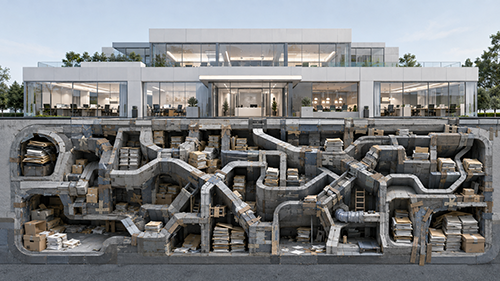

The team is busy. Customers are coming in. Revenue may even be growing. Yet somehow the owner is answering the same questions every day, solving the same problems every week, and putting out the same fires every month. It starts to feel like the business is running the owner instead of the other way around.
Here’s the hard truth: businesses rarely become chaotic overnight. They become chaotic one shortcut at a time.
A process never gets documented because everyone “already knows how to do it.” A decision gets made verbally instead of being written down. A customer issue gets solved, but no one asks how to prevent it from happening again. None of those choices seem significant in the moment, but over time they become the way the business operates.
Then growth arrives.
Most people assume growth solves problems. In reality, it magnifies them. More customers mean more questions. More employees mean more communication. More transactions mean more opportunities for something to fall through the cracks. What once felt manageable suddenly feels overwhelming, not because the business grew too quickly, but because the infrastructure never grew with it.
One of the biggest misconceptions in business is that success comes from doing more. More marketing. More leads. More sales. More hours.
In my experience, lasting success usually comes from doing the opposite. It comes from removing the friction that slows people down every day.
That might mean documenting a process instead of explaining it five times a week. It might mean clarifying roles so employees stop guessing who’s responsible. It might mean creating a simple checklist that ensures customers receive the same exceptional experience every time.
These aren’t glamorous changes, and they rarely make headlines. But they’re the improvements that quietly transform a business from reactive to reliable.
The strongest companies aren’t the ones with the busiest owners. They’re the ones that have intentionally designed how work gets done. When the systems improve, the business becomes easier to lead, employees become more confident, customers receive more consistent service, and growth becomes something to enjoy instead of something to survive.
Business doesn’t have to feel chaotic. More often than not, clarity isn’t found by working harder. It’s found by building better.

Be the first to comment