
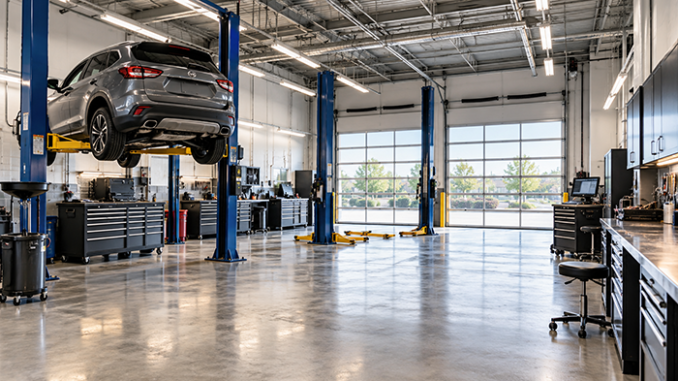

A good auto technician already understands how much knowledge sits behind a successful repair. Shop ownership adds another layer with leases, payroll, permits, equipment costs, customer service, parts orders, and dozens of daily decisions. Get a clear view of what to know before opening an auto repair shop with our full walkthrough below.
Solidify a Business Plan That Reflects the Real Shop
A business plan doesn’t need to read like a corporate textbook. It does need to explain what type of work your shop will accept, who your customers are, expected revenue, and probable expenses. A general repair shop has different needs from a collision center, transmission specialist, or European vehicle shop. Those differences affect equipment, technician experience, parts inventory, bay layout, and promotional costs.
Put realistic numbers behind the concept. Rent, utilities, insurance, payroll, software, waste disposal, tools, lifts, diagnostic equipment, taxes, and parts can consume revenue fast. Add a reserve for slow months and unexpected expenses rather than assume every bay will stay full from day one.
Choose a Location for Work, Not Just Visibility
A busy road and a large sign may help customers notice a shop, but the property itself has to support repair work. Look at bay count, vehicle access, electrical capacity, ventilation, drainage, storage, customer space, and room for vehicle drop-off. A low-cost property can become expensive after major upgrades.
Local rules deserve attention before a lease or purchase becomes final. Business licenses, land-use rules, environmental requirements, fire codes, waste rules, and repair-related regulations can vary by location. Confirm that the property can legally support your planned services. Professional legal and financial advice can also expose obligations that aren’t obvious from the shop floor.
Build an Equipment List Around Your Services
It’s easy to walk through an equipment catalog and want every new tool at once. A better approach starts with the services listed in your business plan. Brake and suspension work may call for lifts, presses, scan tools, and specialty hand tools. Tire service adds tire machines and balancers, and advanced electrical diagnosis may call for meters, service data, and manufacturer-specific resources.
Separate immediate purchases from equipment that can wait until customer demand supports the cost. This protects cash and keeps the shop from becoming crowded with expensive machines that see little use. Used equipment may reduce upfront expense, but condition, calibration, parts access, and service support deserve a close look.
Create a Parts and Supplier Strategy Before Day One
Parts access affects more than the repair itself. It influences estimate accuracy, turnaround time, technician productivity, and customer satisfaction. Establish accounts with dependable distributors before the schedule fills up, and learn the strengths of each source. One distributor may excel at common maintenance parts, while another may provide better access to electrical components or vehicle-specific items.
Specialty vendors deserve a place on that list, too. A damaged connector, harness plug, or electrical component can stall an otherwise straightforward repair. Understanding details like the pros and cons of aftermarket wire connectors will help you establish a strong source of parts when you need them.
Hire for More Than Technical Ability
A talented technician can diagnose a difficult fault, but a productive shop also depends on communication, consistency, documentation, and respect for process. Define each role before recruitment starts. Every single one of your staff members need clear responsibilities so tasks don’t disappear between the front counter and the bays.
Pay structure deserves careful thought as well. Hourly pay, flat rate, salary, bonuses, and hybrid models each shape the workplace in different ways. Employees should understand their compensation and the standards the shop expects. Clear policies for inspections, tool use, attendance, and customer vehicles can prevent confusion later.
Design the Customer Experience in Advance
Customers judge a repair shop long before they know if every technical detail was perfect. They notice how fast someone greets them, how clearly the estimate explains the repair, and how organized the front counter feels. They also remember surprise charges, missed deadlines, and vague updates.
Create a repeatable process from appointment to vehicle pickup. Decide how estimates reach customers, how approvals get documented, when status updates go out, and how staff handle added repairs. Photos and inspection notes can help customers understand recommendations without a long technical lecture. A consistent process also gives the team a common standard on hectic days.
Set Prices From Costs, Not Competitor Guesswork
New owners sometimes look at nearby shops and copy their labor rate. That number may have little connection to the costs inside your business. Calculate overhead, labor expense, desired margin, productive hours, parts policies, taxes, and other shop costs before you establish prices.
The lowest rate in town can attract attention, but it can also leave too little room for payroll, equipment repairs, and future upgrades. Customers don’t pay only for a technician’s minutes at the vehicle. Their bill also supports facility costs and the shop’s ability to stand behind its work.
Put Shop Systems in Place Early
A small shop can feel manageable with a notebook, a phone, and a few vehicles on the schedule. That approach gets messy as volume rises. Shop management software can organize estimates, repair orders, customer records, parts, technician time, invoices, and service history in one place.
Set procedures before the pace accelerates. Decide how technicians document inspections, how staff receive parts, how the shop handles old components, and who closes each repair order. Create a process for warranty claims and customer complaints as well. Structure may feel formal at first, but it gives a new shop room to grow without chaos.
It All Comes Down to Preparation
Exploring what you need to know before opening an auto repair shop is essential for shops of any size. Your repair shop needs more than mechanical talent and a set of open bays. A solid foundation comes from realistic finances, a suitable property, and many other key factors.
Those pieces support each other, and weak spots become much harder to fix once the schedule is full. Give yourself time to establish those pieces before opening day. A good start gives your business more room to develop into the shop you had in mind.
Be the first to comment