
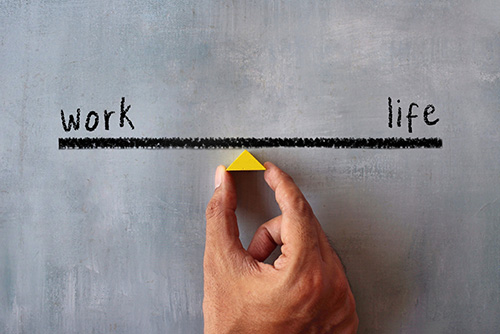

If you’re an adult working full-time in the United States, you’re likely working well over 2,000 hours in a year that contains only 8,760 hours. When you factor in a healthy eight hours of sleep a night, you’re down 2,920 more. Sacrificing half a year to work and recovery every year can be daunting and overwhelming, and countless employees and business leaders can pay the price in stress or emotional stamina deficits.
Emotional stamina can be defined as the ability, or lack thereof, to manage stress, workload and all of the other things that can drag one down. Success, perhaps, is a key indicator of a salesman or a manager who has figured out the key to maintaining positive emotional stamina. For those who haven’t, more attention is being paid globally by professionals, governments and business leaders every year to the mental blocks that can prevent us from producing our best work.
According to the World Health Organization, almost 60% of Earth’s population is working. As of the time of writing, that’s nearly 5 billion people. It’s easy to assume a great many of that group are overworked or underutilized, working multiple jobs or struggling to make one job work. These are only a few things that can contribute to workplace fatigue, which can in turn lead to downturns in company productivity, morale and profit.
A February 2023 Pew Research Center study showed that 51% of U.S. surveyed employed adults are satisfied with their jobs. The scales of workplace satisfaction are teetering and more employers across the country are beginning to offer mental health resources among their benefits. Across the pond, results of happy workers can be seen in a 2019 Oxford University study, in which telecommunications workers were found to be 13% more productive when happy.
The U.S. government has shown progress with policy-making in this field in the 21st century, with federal laws like the Mental Health Parity and Addiction Equity Act, or MHPAEA, which prevents group health plans or insurance providers from imposing limitations on mental-health related benefits, like therapy visit limits.
As the conversations around mental health in the workplace continue to broaden, business leaders should continue to provide their employees with access to resources that, among the obvious personal benefits, can keep them focused and productive.
Employee Assistance Programs, or EAPs, have started being utilized more in the last century. Companies in the 1940s began forming programs to address alcoholism among workers, and the early ’60s expanded on these blueprints to include other problems in the home like familial, psychological or legal problems. EAPs have since expanded to cover many different aspects of life, like work-life balance, legal and financial assistance and critical incident support. As documented by 2021 U.S. Bureau of Labor data, over 70 million workers in both the public and private sector had EAP access at that time. Remote workers are able to capitalize on these programs as well if their employer offers virtual or online counseling services.
Success is perhaps the most obvious harbinger of emotional stamina, but there are other ways to stay energized and productive without bearing the weight of your own work. Professionals have long recommended brief breaks during the workday to stretch your legs, clear your head or get some fresh air. Maintaining a healthy and positive social life outside of work can also leave you feeling energized when the week rolls over again.
Energy is integral to workplace success. A 2007 article from the Harvard Business Review states, “Defined in physics as the capacity to work, energy comes from four main wellsprings in human beings: the body, emotions, mind, and spirit. In each, energy can be systematically expanded and regularly renewed by establishing specific rituals- behaviors that are intentionally practiced and precisely scheduled, with the goal of making them unconscious and automatic as quickly as possible.” Stability and routines aren’t only good for achieving your goals in the workplace, but can have a positive effect on your everyday life as well.
Business leaders across the world can and have taken notes. When employees look to a leader for support, it’s important to ensure that they’re equipped for the task. Besides the programs and methods listed above, there are other ways for modern business leaders to give their employees confidence and renew their emotional stamina. Leaders can be responsible for setting the tone in the office or out in the field, which is crucial for cohesion and positivity within smaller teams. Encouraging collaboration amongst employees can also reap rewards for a company’s bottom line.
Warren Buffett once said, “Chains of habit are too light to be felt until they are too heavy to be broken.” Applying this thinking to your routines in work and in daily life can lead you down a path of success and personal prosperity.
