
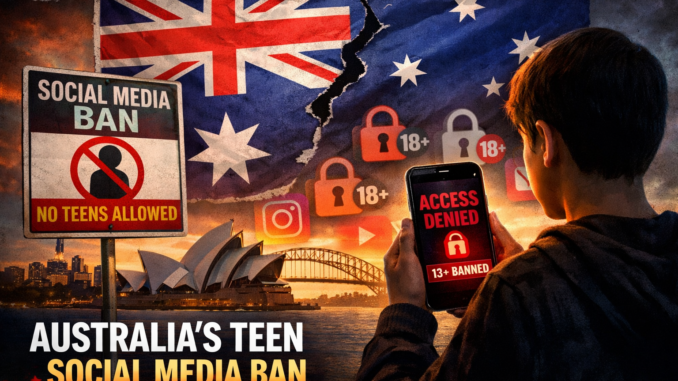

After much consternation, hand-wringing and debate played out on digital platforms and
public forums, the proposed social media ban on teenagers in Australia went into effect on
December 10, 2025. All major tech companies—from TikTok, Twitch, Snapchat, Meta’s
Facebook, Instagram and Threads, YouTube, X and Reddit—followed suit and became age
restrictive under the law.
More than 1 million social media accounts held by teenagers were deactivated on
Wednesday in a divisive world-first ban that is being globally monitored and proclaimed as
the first such “domino” to fall.
Australian Prime Minister Anthony Albanese called it a “proud day” for all families and
proclaimed the move as a “profound reform which will continue to reverberate around the
world.” The move has drawn major criticism from tech companies and free speech
advocates but has been praised by parents and many child advocates.
Australian officials say the landmark ban is meant to protect children from addictive social
media platforms that some experts have claimed is having a disastrous impact on their
mental health. Social media businesses earn, reportedly, little advertising revenue from the
under 16 age group, but young users represent a huge pipeline across all platforms. Just
before the ban took effect, 86% of Australians aged 8-15 used social media, according to
government reports.
Some advocates claim the so-called “predatory algorithms” leave young teens exposed to
cyberbullying, false body image and body shaming tactics, misogynistic material, and
content allegedly promoting eating disorders and self-harm. Not to mention the
overpowering distraction that mobile devices become, contributing to more interpersonal
withdrawal, depression, high anxiety and less human interaction skills being learned at the
appropriate age.
According to one Australian study, 7 out of 10 young users have been exposed to potentially
harmful content, while one in seven have experienced “grooming type” behavior from
adults or older children, and more than half of study participants said they had been
victims of cyberbullying.
However, others claim the ban could further isolate individuals and provide fewer outlets
for expression, creativity and gaining knowledge. Some claim it will hinder young people’s
ability to connect with others, access online support for those in marginalized groups or
those living in isolated or rural areas.
But social media is not going away anytime soon. The platforms say they share the goals of
making users safe, but the ban itself, by its nature, may make teens less safe. In a
statement issued last month, Snapchat stated “Disconnecting teens from their friends and
family doesn’t make them safer — it may push them to less safe, less private messaging
apps.”
The platforms also argue that young users may turn to newer, unregulated apps that push
them into darker corners of the internet or may try to circumvent the ban by using virtual
private networks. Plus, the very nature of imposing a ban fosters individuals to try and find a
way around it.
On Tuesday, a Meta spokesperson claimed in a statement that “experts, youth groups, and
many parents agree that blanket bans are not the solution—they isolate teens from online
communities and information, while providing inconsistent protection across the many apps
they use. There’s a better way: legislation that empowers parents to approve app downloads
and verify age that allows families—not the government—to decide which apps teens can
access.”
Companies have told the Australian government that they will employ a mixture of age
inference—estimating a user’s age from their behavior—and age estimation based on
selfies, alongside checks that could include uploaded identification documents or linked
bank account details.
Elon Musk’s X was the last of the ten major platforms to comply with the measures put in
place by the Australian government. “It’s not our choice – it’s what the Australian law
requires,” X said on its website. “X automatically offboards anyone who does not meet our
age requirements.”
Others claim the solution is not in bans, but in becoming more digitally literate, including
providing such information to kids in schools. Project Rockit, a youth-driven Australian
movement against bullying, hate and prejudice, has partnered with Facebook in the past,
and says that the ban reflects a growing consensus that children could benefit from more
online safety measures, but questions how effective the new law will be.
“Our children need support,” said Dan Donahoo, head of projects at Project Rockit. “And we
want to look after them, we want to support them in this sort of emerging digital age that we’re
all living in. But we’re also wondering about whether or not this is the best way to really keep
them safe,” said Donahoo.
Social media companies will be responsible for enforcing the ban, paying fines up to $49.5
million Australian dollars (about $32 million in USD) for serious or repeated breaches.
Children and parents will not be punished for any infringements.
