


You may have noticed with the beginning of Trump’s second term that news outlets reported many institutions are rolling back their DEI policies. In fact, they’re not stepping back at all. On the contrary, the concepts are being redefined in a healthier way. In many places, what’s being left out of the equation is “E,” which stands for equity. The focus is now on inclusion. And I believe that’s exactly how it should be.
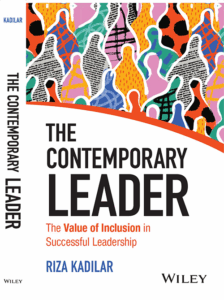
The goal is to create an environment where everyone feels safe, where they can bring out their best selves and performance, and where they feel seen and heard. This is the most critical issue for any human community today across all levels of society — from families to neighborhoods, to companies, cities, and nations.
Inclusion isn’t just about an organization or community accepting differences, but actively embracing them and enabling an environment where all members can contribute. While diversity refers to the presence of different identities, races, genders, ages, and other demographic traits within an organization, inclusion means managing this diversity effectively and viewing these differences as active contributions to the organization’s success.
An inclusive culture creates a workplace where employees develop a sense of belonging. It provides a platform for freely sharing ideas, perspectives, and experiences. In an inclusive environment, everyone isn’t just invited but also encouraged to actively participate.
Diversity and inclusion are concepts that support each other, and when one is missing or diminished, significant challenges arise. But what about the “E” in between? Why did it enter, and why is it now being dropped?
The “E” initially stood for equality, and later also for equity. Gallup, for instance, defines equity as fair treatment, access, and advancement for each person within an organization. It adds: “Equity often relates to issues of pay fairness, opportunities for advancement, and fairness in daily work experiences.” How wonderful it would be if everyone always received their due, and if all practices generated a sense of fairness in everyone, right? Unfortunately, this isn’t really possible; it goes against human nature.
In coaching work, the concept of “justice” or “rights” constantly surfaces. It’s subjective for every individual and changes depending on circumstances. It is situational and can trigger different emotions depending on your perspective. Yet building a sustainable system that satisfies everyone simultaneously is virtually impossible. Psychological factors, sociological elements, personality traits, life stages, and perspectives all come into play. When the focus shifts to equity, it becomes almost impossible to achieve the desired sense of inclusion shared by all.
Years ago, I was involved in the founding of a bank. I wasn’t on the executive committee, but I was among the senior managers — around 30 of us at the time. One day, I happened to see a document accidentally left on the fax machine. Before I fully realized what it was, the numbers
caught my eye: it was a list of everyone’s salaries and bonuses. I’ll never forget the emotions I felt that day. I was so demotivated and upset. Seeing how much more some earned, and the differences between us, was extremely discomforting. I can say it was the most demotivating moment of my 30-year banking career.
Diversity supported by a sense of inclusion is a wonderful thing. But one single concept can instantly destroy this: equity.
Inclusion aims to ensure recognition of equal opportunities and evaluation of everyone in line with their talents and potential. Equal opportunity means creating an environment where all employees can contribute at the same level. Yet here is the key point: it’s not about treating everyone equally — it’s about treating them fairly. The fundamental principle of inclusion isn’t supporting everyone the same way, but supporting them in line with their specific needs.
So what now?
Equity, like respect, psychological safety, awareness of conscious and unconscious bias, privilege, and cognitive dissonance, is one of the key sub-concepts of inclusion. For this reason, on the journey toward inclusion, I recommend institutions consider the following:
- Measure inclusion and listen to your employees: The best way to measure inclusion is to ask employees how they feel. Create feedback mechanisms and use these insights to identify weak points.
- Model inclusive behaviors: Leaders should demonstrate inclusion not just as a policy but as a behavior. Lead by supporting diverse perspectives, creating open communication channels, and ensuring all voices are heard.
- Know your employees beyond their job titles: The pandemic revealed that many organizations don’t really know their employees. Inclusion requires recognizing them beyond workplace roles and understanding their personal motivations.
- Be fair, not equal: It’s more important for employees to feel they’re supported according to their needs than to be treated identically. This enables them to contribute at their best.
- Appreciate and celebrate success: Recognition should celebrate not only individual achievements but also team achievements. An inclusive culture thrives in environments where collective success is highlighted.
- Promote continuous learning and development: Building an inclusive culture requires ongoing learning. Understanding biases, accepting different perspectives, and developing the skills necessary for inclusion are all part of this process.
By dropping the “E”, we aren’t taking a step back in the discourse on inclusion. On the contrary, we’ve removed a natural obstacle standing in front of the real goal that has simply been redefined on a new level.
