


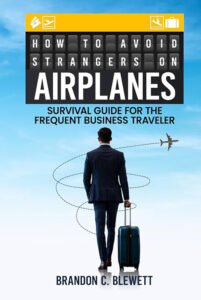
 You might expect an author who wrote a book called How to Avoid Strangers on Airplanes to prefer a work environment free from small talk, handshakes, and human contact. But the title is a play on words. It isn’t about isolation. It’s about awareness… and a good roast of the annoyingly strange passenger habits we encounter during air travel. In the “Gate Lice” chapter, I tell the story of Brian Sanderson, a stand-by passenger desperate to get to New York. He hovered near the boarding lanes, inching closer to the stanchion with each announcement, as if proximity alone might earn him a seat. It didn’t. What finally got him there was a friendly gate agent and pilot who noticed his situation and offered an alternate route through Philadelphia. It wasn’t the path Brian expected, but it got him where he wanted to go. The same is true in our careers. Presence opens doors that planning alone can’t.
Like Brian, I wouldn’t have made it to my own figurative New York without a few unexpected detours and the right people pointing the way.
My intended destination was deal-making. The law school version of me pictured negotiating multimillion-dollar transactions in tailored suits. Maybe even returning some videotapes. Instead, I started in M&A tax advisory, surrounded by people who actually understood the code sections I was pretending to. Not glamorous or ideal, but being in the room every day mattered. By showing up, I was visible to leaders in other groups.
Why did that matter? Those leaders didn’t always offer flattering feedback. And by “always,” I mean rarely. But they saw work ethic and a desire to learn. I learned through proximity. There were late-night discussions in shared conference rooms, conversations in crowded airline lounges due to delayed flights, and hallway debriefs that began with “that meeting didn’t go great.” Those moments taught me more than technical rules ever could. They showed me when I was wrong, when I was out of place, and when it was time to try something different. Something where I could excel (no pun intended).
When one senior manager noticed how I handled live client discussions and how I thought about the deals beyond the tax impacts, he suggested I move into M&A Strategy. That was my Philadelphia. Not where I thought I was headed, but the connection that changed everything.
Each new project expanded my toolkit. Each live meeting introduced me to people who became mentors, colleagues, and friends. Those relationships eventually guided me out of professional services and into roles that crescendoed with me leading M&A, my New York City. Many of the people I met along the way are still part of my orbit: trusted advisors, sounding boards, and friends who remind me how each stop mattered.
None of that would have happened through a screen. It took showing up, being present for the late nights, the missed flights, and the right conversations, to meet the gate agents and pilots who helped me gather all the tools I needed and arrive in my Manhattan.
I doubt my story is all that unusual. Most of us got where we are because someone saw something in us… and they probably couldn’t have done that over Zoom.
Return-to-office mandates are usually defended with words like productivity, collaboration, or culture. Sometimes all three. Occasionally, culture is cobbled together with cubicles, and pizza parties. But being in person was never just about keeping people visible. It was about giving them visibility.
Requiring people to work in person shouldn’t be merely about repeating what we did. It should be about recreating the environment that helped us grow. The late nights, the side conversations, the quick check-ins that turned into mentorship. Those moments don’t happen on mute. Presence gives you a front-row seat to see potential, not just performance.
It also gives people permission to be wrong. Most of my career turns started with realizing I wasn’t great at something and having someone nearby who cared enough to tell me. The goal isn’t to make work comfortable. It’s to make it safe to learn, recalibrate, and find the right fit.
And the real payoff comes from cross-pollination. When people work side by side, skills blend. You overhear how someone else frames a problem. You pick up habits, perspectives, and shortcuts you’d never find on a call. That’s how future leaders get built, not in silos, but in rooms where curiosity is contagious.
If we’re going to ask people to show up, it should be for that. To see and be seen. To create the kind of in-person experience that shapes careers, not just calendars.
The same lessons that built my career built the team I lead today. The wins we’ve had, the deals, the growth, the chaos that somehow turned into momentum, all came from showing up for each other. The most meaningful part isn’t the transactions. It’s watching the people around me build confidence, find their footing, and then go do the same for themselves.
Some of the mentors who once gave me tough feedback are now my advisors and peers. And some of the people I’ve worked with have gone on to lead teams of their own, paying forward the same lessons that once redirected me. That’s the real return on presence.
In the end, we all have a choice. You can wait at the gate, refreshing the app on your phone and website on your laptop; hoping a seat opens up on the flight you planned. Or you can show up, talk to the gate agents and pilots, and find a better way to get to New York.
