
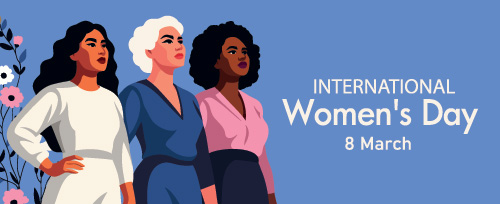

Every March, the world pauses to celebrate International Women’s Day on March 8 and Women’s History Month throughout the United States. Companies host panels, social media fills with inspirational quotes, and leaders reflect on the remarkable women who changed history.
But beyond the flowers, hashtags, and celebratory posts lies a deeper story, one that is reshaping the global economy.
Women are not just participating in economic growth. Increasingly, we are driving it.
From startups to boardrooms to investment committees, women are launching companies, directing capital, shaping policy, and building organizations that influence millions of lives. The rise of women in entrepreneurship and leadership is one of the most powerful economic forces of the modern era.
International Women’s Day and Women’s History Month remind us that the conversation about women’s advancement is not simply about equality. It is about unlocking innovation, expanding economic opportunity, and strengthening the future of global business.
The Economic Power of Women
The economic influence of women has grown exponentially over the past several decades, and the data tells a compelling story.
According to American Express’s State of Women-Owned Businesses Report, women own more than 13 million businesses in the United States, representing roughly 42% of all U.S. businesses and generating nearly $2.7 trillion in annual revenue.
Globally, women’s purchasing power continues to surge. Boston Consulting Group estimates that women currently control or influence about $32 trillion in global consumer spending, a number projected to reach $40 trillion by the end of the decade.
Meanwhile, research from the McKinsey Global Institute consistently shows that closing gender gaps in workforce participation and leadership could unlock trillions of dollars in economic growth worldwide through increased productivity, entrepreneurship, and innovation.
These figures underscore a simple reality: empowering women is a key economic strategy.
From Exclusion to Influence
The progress celebrated during Women’s History Month stands on the shoulders of generations who fought for access to opportunity.
In 1920, American women secured the right to vote through the 19th Amendment. During World War II, millions entered industrial jobs traditionally held by men, symbolized by the iconic image of Rosie the Riveter.
Yet it was not until 1974, with the passage of the Equal Credit Opportunity Act, that women in the United States gained the legal right to open credit accounts without a male co-signer.
That moment, only a few decades ago, marked a turning point in women’s financial independence.
Today, women are CEOs, venture capitalists, entrepreneurs, and global investors. Yet progress remains uneven. Women hold only about 10% of Fortune 500 CEO roles and female founders still receive an absurdly small fraction of venture capital funding globally.
The gap between potential and opportunity remains significant, but it also represents enormous untapped economic potential.
Women Entrepreneurs Are Reshaping the Economy
If the past century was about women entering the workforce, the next chapter is about women building companies and reshaping industries.
Across sectors, from technology to consumer products to health innovation, female founders are identifying underserved markets and creating powerful solutions.
Some of the most influential entrepreneurs of the past two decades are women who saw opportunities where others saw limits.
Sara Blakely, founder of Spanx, famously launched her company with just $5,000 in savings and no background in fashion or retail. What began as a simple idea to improve women’s undergarments evolved into a billion-dollar global brand and revolutionized an entire product category.
Similarly, Melanie Perkins, co-founder and CEO of Canva, transformed the design industry by creating a platform that made professional graphic design accessible to millions of people around the world. Today Canva is one of the most valuable private technology companies globally and has fundamentally changed how businesses, educators, and creators produce visual content.
Consider Merrilee Kick, founder of BuzzBallz, who built a ready-to-drink cocktail company that disrupted the beverage industry and ultimately sold for over a billion dollars.
These entrepreneurs demonstrate a pattern that researchers increasingly recognize. Women founders often identify overlooked markets and build solutions that resonate deeply with consumers.
The Capital Gap and the Opportunity It Represents
Despite strong performance, access to capital remains one of the biggest challenges for female entrepreneurs.
According to PitchBook, startups founded solely by women still receive a small percentage of total venture capital investment annually.
Yet research from Boston Consulting Group found that startups founded or co-founded by women generated 78 cents of revenue for every dollar invested, compared with 31 cents for male-founded startups.
In other words, women-led companies often deliver higher revenue efficiency, yet receive less funding.
For investors, this disparity represents not just a social challenge, but a significant market opportunity. When the pool of investors becomes more diverse, the range of ideas that receive funding expands and innovation accelerates.
The Rise of Financial Empowerment Ecosystems
Another powerful shift is occurring through platforms focused on financial empowerment and entrepreneurship.
Communities and networks are emerging to provide women with the knowledge, mentorship, and access needed to build wealth and scale businesses.
Initiatives like the Her Money Moves Summit, Her Money Moves Podcast, and Dream Big Ventures are helping create spaces where women can learn about investing, entrepreneurship, leadership, and financial literacy.
These platforms reflect a broader movement: empowering women not only as entrepreneurs but also as investors, decision-makers, and architects of the future economy.
Financial knowledge is power. And when women gain access to the tools and networks needed to build wealth, the impact extends far beyond individual success.
It strengthens families, communities, and entire economies.
Leadership That Reflects the Future
The conversation around women’s advancement is no longer limited to entrepreneurship.
It extends to leadership across business, finance, technology, and government.
Research from McKinsey & Company’s Women in the Workplace report shows that companies in the top quartile for gender diversity on executive teams are 25% more likely to achieve above-average profitability compared with companies in the bottom quartile.
Diverse leadership teams bring broader perspectives, which can improve decision-making, innovation, and risk management.
In an economy shaped by rapid technological change, from artificial intelligence to digital transformation, these advantages are more important than ever.
Organizations that cultivate inclusive leadership are not simply responding to social expectations. They are positioning themselves to compete more effectively in complex global markets.
A New Generation Watching
Perhaps the most powerful impact of Women’s History Month is what it signals to the next generation.
Young girls like my 13-year-old daughter Sofia are growing up seeing women launching companies, running venture funds, leading global movements, and shaping policy.
Representation matters because it expands what feels possible.
A girl who sees women building companies and influencing industries is more likely to imagine herself doing the same. And when those aspirations become reality, the economic impact multiplies.
A Celebration and a Challenge
Celebrating women should never be confined to a single day or month.
It should inspire meaningful action, expanding access to education, increasing representation in leadership, investing in women entrepreneurs, and ensuring that financial literacy and capital are accessible to everyone.
Because the economic case is clear.
When women rise, innovation accelerates.
When women lead, businesses grow.
When women invest, entire ecosystems expand.
International Women’s Day and Women’s History Month are not simply a celebration of history.
It is a reminder that the future of economic growth, entrepreneurship, and innovation will increasingly be shaped by women who are building companies, directing capital, and leading organizations around the world.
The next chapter of business history is already unfolding.
And more women than ever are writing it.
