
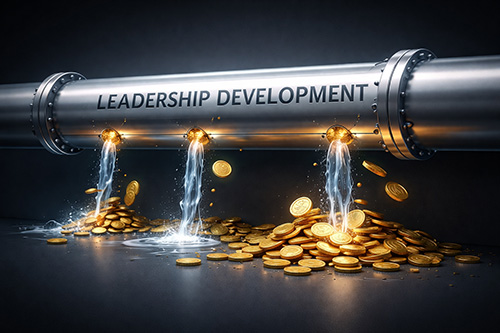

The strategic imperative for robust leadership development programs is rarely questioned. Organizations invest significant resources to cultivate future leaders. This investment is often framed as a crucial element of long-term stability and growth.
However, a closer examination reveals a potential downside. When not meticulously managed, leadership development can inadvertently become a drain on financial resources. It can shift from a growth enabler to a margin erosion strategy.
The Hidden Financial Burden of Cultivating Leaders
Leadership development encompasses a wide array of activities. These include formal training, mentorship programs, job rotation, and special projects. Each component carries its own cost. Direct expenses for external trainers and materials are only part of the equation.
Consider the opportunity cost. When high-potential employees are engaged in development activities, they are often diverted from their core responsibilities. This can lead to a temporary dip in productivity. Projects may be delayed. Critical tasks might receive less attention.
Moreover, the time invested by senior leaders acting as mentors or trainers also represents a significant expense. Their focus is pulled away from strategic decision-making and operational oversight. This can impact the overall efficiency of the business.
Direct Program Expenditures
Formal training sessions, workshops, and executive coaching are common elements. These often involve substantial fees. External consultants and specialized educational institutions command premium rates for their expertise.
Travel and accommodation expenses can add up quickly. Especially for organizations with geographically dispersed teams. Sending employees to offsite development programs incurs significant logistical costs. These are often underestimated in initial budgeting.
Curriculum development and material creation also require investment. Whether done in-house or outsourced, this demands skilled personnel and time. Ensuring the content remains relevant and effective is an ongoing challenge.
Indirect Costs of Diversion
When promising individuals are pulled from their daily roles, their immediate output decreases. This can lead to a need for temporary staffing. Or it might mean existing teams must absorb additional workload.
This diversion can impact project timelines. Delays in key initiatives can have ripple effects across departments. For businesses reliant on rapid execution, this can be particularly damaging to market competitiveness.
Furthermore, the morale of the remaining team members can be affected. If they perceive an imbalance in workload or that key individuals are perpetually unavailable, it can breed resentment.
Measuring ROI: The Elusive Metric in Leadership Growth
The challenge in quantifying the value of leadership development lies in its long-term and often intangible benefits. How does one precisely measure the impact of a future leader’s improved decision-making skills on quarterly profits?
Traditional return on investment (ROI) calculations often struggle to capture these qualitative improvements. This makes it difficult to justify continued or increased investment. Especially when facing pressure to boost short-term financial performance.
The time lag between investment and realized benefit is another complicating factor. It can take years for a developed leader to reach a position where their full impact is felt. During this period, the upfront costs continue to accrue.
Attributing Success to Development
When a company experiences a period of strong growth or successful innovation, it’s tempting to attribute it to recent leadership development efforts. However, isolating the precise contribution of these programs is incredibly complex.
Many external factors influence business success. Market conditions, economic trends, and competitive landscapes all play a role. Disentangling these influences from the impact of internal development is a significant analytical hurdle.
This ambiguity can lead to underfunded or mismanaged development initiatives. Without clear metrics and demonstrable returns, such programs can become easy targets for budget cuts.
The Opportunity Cost of Inaction
Conversely, the cost of *not* developing leaders is also substantial. A lack of succession planning can lead to critical knowledge gaps when tenured leaders depart. This can result in operational disruptions and loss of institutional memory.
The inability to adapt to changing market demands due to a stagnant leadership pool can cripple long-term viability. Innovation can falter. Competitive advantages can erode.
Therefore, the decision is not whether to invest in leadership development, but how to do so effectively and efficiently. It requires a strategic approach that balances future needs with current financial realities.
Strategic Alignment: Bridging Development and Business Objectives
To prevent leadership development from becoming a margin erosion strategy, it must be tightly aligned with overarching business objectives. This ensures that resources are directed towards developing the capabilities most critical for future success.
Instead of broad, unfocused programs, organizations should identify specific leadership competencies that directly support strategic goals. This might involve developing expertise in emerging technologies, digital transformation, or global market expansion.
The selection process for development candidates should also be rigorous. It needs to consider not just potential, but also current contributions and alignment with company values. This prevents valuable resources from being allocated to individuals who may not ultimately contribute to the desired outcomes.
Defining Clear Development Pathways
Well-defined career paths and development roadmaps are essential. These should outline the specific skills, experiences, and knowledge required at each leadership level. This provides clarity for both the organization and the individual.
This structured approach allows for targeted interventions. Rather than generic training, individuals receive development tailored to their specific role and future potential. This maximizes the impact of the investment.
Custom software development services, for example, can be instrumental in creating bespoke platforms for training and talent management. Such platforms can track progress, personalize learning modules, and provide data-driven insights into development effectiveness.
Integrating Development with Operational Needs
The most effective leadership development programs find ways to integrate learning with ongoing operational demands. This minimizes the disruptive impact on daily business functions.
Project-based learning is a prime example. Assigning high-potential employees to lead critical projects, with appropriate mentorship and support, allows them to gain practical experience while still contributing to business goals.
This approach requires careful project selection and management. The projects must offer sufficient challenge and learning opportunities without being so overwhelming that they jeopardize their successful completion. It’s a delicate balance.
Optimizing Investment: Cost-Effective Development Models
Organizations can adopt several strategies to make leadership development more cost-effective without sacrificing quality. This involves looking beyond traditional, high-cost training models.
Leveraging internal expertise is a powerful tactic. Senior leaders and subject matter experts can be invaluable resources for mentoring and knowledge sharing. This significantly reduces the need for external consultants.
Technology can also play a crucial role. Online learning platforms, virtual reality simulations, and AI-powered coaching tools offer scalable and often more affordable alternatives to in-person training.
The Role of Technology in Efficient Development
Digital platforms can democratize access to learning resources. They allow for self-paced learning and provide consistent access to information and training modules, regardless of geographical location.
AI can personalize learning journeys. It can identify knowledge gaps and recommend specific resources or exercises. This ensures that development efforts are focused and efficient.
For businesses looking to build out their tech capabilities, engaging with a specialized software development startups can lead to innovative solutions for internal training and development needs. These companies often offer agile approaches and cost-effective solutions.
Strategic Outsourcing and Partnerships
While internal development is valuable, strategic outsourcing can fill specific skill gaps. Partnering with specialized firms for certain aspects of leadership training can be more efficient than building that expertise in-house.
This requires careful vendor selection. The partner should demonstrate a clear understanding of the organization’s strategic goals and leadership competency requirements.
Ultimately, a blended approach often yields the best results. Combining internal mentorship with targeted external programs and technology-enabled learning creates a robust and cost-effective development ecosystem.
Shifting the Paradigm: Development as a Strategic Asset, Not a Cost Center
The perception of leadership development as a cost center is a fundamental flaw. When viewed through the lens of strategic asset creation, its value becomes undeniable.
The goal is to cultivate leaders who can navigate complexity, drive innovation, and ensure the long-term sustainability of the business. This requires a proactive and strategic approach to talent cultivation.
By meticulously planning, aligning with business objectives, and leveraging cost-effective models, organizations can ensure that their leadership development initiatives are powerful drivers of growth and competitive advantage. They can transform a potential margin erosion strategy into a potent tool for margin enhancement.
Conclusion
Leadership development is a critical investment for any organization aiming for sustained success. The key lies in strategic execution. By focusing on alignment, efficiency, and measurable outcomes, companies can ensure that their efforts yield significant returns.
Avoiding the pitfalls of uncontrolled costs and unproven ROI requires a deliberate and integrated approach. This ensures that the investment in future leaders truly strengthens the organization’s foundation and drives its future prosperity.
“Strategic leadership development isn’t about accumulating training hours; it’s about building a scalable, adaptable talent pipeline that directly fuels business objectives.”
— Kuldeep Kundal, CISIN
