
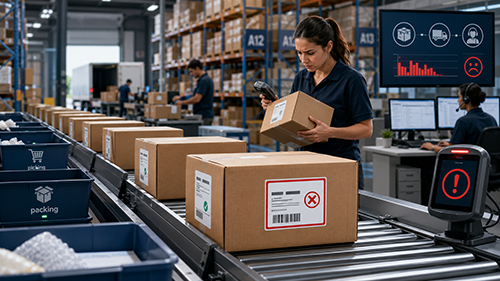

A single wrong label rarely seems like a major problem at first. You might find it on a shelf, attached to a part, or linked to a customer order. However, the real trouble begins when that mistake moves through your operation.
As it passes from picking to packing and then on to shipping, the impact grows. If you run a small or medium-sized business, understanding how one labeling error delays every order can help you see why accuracy matters long before products leave your facility.
The First Mistake Spreads Quickly
Most labeling errors start with a simple mismatch between a product and the information attached to it. Once someone picks the wrong item, the mistake gains momentum. The packing team prepares the order, the shipping department ships it, and nobody notices the issue until the customer reports a problem. As a result, one incorrect label creates extra work across multiple departments before anyone has a chance to correct it.
Inventory Counts Stop Making Sense
When labels fail to match the products on your shelves, inventory records quickly become unreliable. You may believe you have several units available when the correct item was actually left in the warehouse under the wrong identification.
Consequently, purchasing decisions become less accurate, and customers face unexpected delays. Smaller businesses often feel these effects more intensely because they depend on precise inventory counts to manage cash flow and customer expectations.
Customer Service Takes the Hit
From the customer’s perspective, the source of the mistake rarely matters. They only know they received the wrong product, so they had to repeat the same explanation multiple times. Because of that, your customer service team must step in to investigate. They review order records and coordinate replacements. While this process consumes valuable time and resources, it also risks customer trust. Over time, repeated mistakes can make buyers question your reliability.
Keep Manufacturing Standards High
Precision manufacturing environments depend on consistency and product quality at every stage of production. Understanding why precision manufacturers invest in deburring equipment starts with recognizing the problems that burrs can create. Small metal imperfections left behind after machining can affect fit and appearance.
By using dedicated deburring equipment, manufacturers improve product reliability and maintain the tight tolerances their customers expect. Effective deburring also helps streamline quality control processes and minimizes the risk of defects reaching the end user.
Accuracy Saves More Than Time
Accurate labeling supports every part of your business. It strengthens inventory management and protects customer trust. Even a small improvement in product identification can prevent larger problems later in the process.
If you examine how one labeling error delays every order, you will often discover that the issue stems from a weak process rather than an individual mistake. By making products easier to identify and verify, you help every order move smoothly from start to finish.