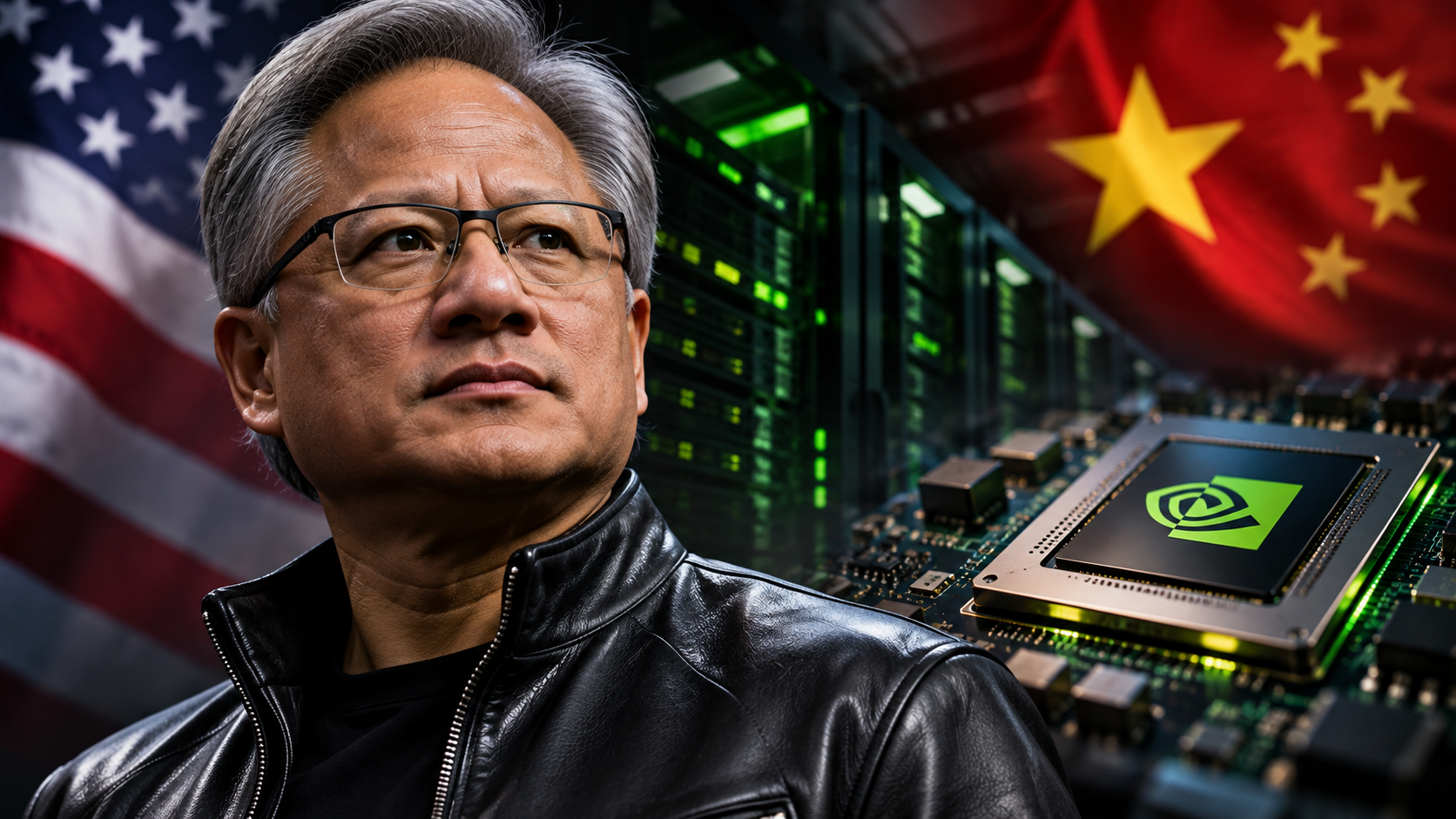

The visionary figurehead of one of the world’s most valuable and profitable companies is at the center of an alleged espionage engagement that raises massive technological and security concerns. Jensen Huang, Nvidia co-founder and CEO and one of the most important figures in the AI race, has been accused of having an affair with a suspected Chinese spy.
According to a New York Times published report, Alice Huang had a close relationship with Jensen Huang and was a spy for Beijing. The CEO admitted to the extra-marital affair but insists he had no knowledge or suspicion of Alice Huang being a spy or informant to any degree.
Nvidia has opened an independent investigation into the affair and maintains that U.S. security has not been compromised and that Jensen Huang is committed to continuing his role as leader and CEO.
U.S. President Donald Trump stated Monday that the FBI is also investigating the affair, though no official statement has been issued. Jensen Huang has also been asked to appear for a joint closed-door briefing for several Congressional committees on November 18.
Members of the U.S. House Foreign Affairs Committee asked Huang to appear to explain his interactions with Alice Huang, as well as Nvidia’s security protocols regarding espionage. Huang has not yet publicly responded to the request.
Trump also stated he spoke with Huang, Trump’s longest ally in Silicon Valley, regarding the incident. In speaking to the President, Jensen Huang denied any knowledge of Alice Huang being an operative. “He said, ‘I had no idea she was a spy,’ and I really believe him,” said Trump, while referring to Huang as an “honorable guy”.
Central questions remain whether Jensen knew of any alleged intelligence activity and whether sensitive information was compromised. “In many respects, Jensen may also be viewed as a potential victim,” said George Chen, partner at consultancy firm The Asia Group, “if he was deliberately targeted or manipulated without knowledge of the individual’s true identity or intentions.”
Nvidia stated its CEO meets thousands of customer executives each year, and that its cloud customers in Asia receive ordinary business information rather than trade secrets or information related to U.S. national security.
Alice Huang (no relation to Jensen Huang), also known as Huang Le, built a career in Chinese finance before emerging as a player in the race for artificial intelligence chips. She held senior roles at a Shanghai investment firm before becoming the controlling shareholder of Singapore-based cloud computing company Megaspeed International from March to November of 2023. Her whereabouts are currently unknown.
Megaspeed describes itself as an Nvidia business partner in the Asia-Pacific region. Megaspeed was suspected of helping divert Nvidia chips to China, though Nvidia’s investigation debunked the allegation.
Reportedly though, Megaspeed is still under investigation by the Singapore government regarding the above allegation.
It remains unclear what, if any, intelligence Alice Huang allegedly gathered and passed to Beijing.
When questioned whether Nvidia was aware of any intelligence concerns, the company said it was not. “We trust that if we were the target of a genuine threat, the U.S. government would have notified us,” said a Nvidia spokesperson.
China has rejected any spy allegations. China’s Foreign Ministry spokesperson Guo Jiakun said, “The allegations about Chinese spies are entirely groundless, speculative and intended to smear and malign China.”
Chipmaker Nvidia is at the heart of the U.S.-China AI race. Trump has been adamant that “whoever wins AI wins”, intimating that retaining the upper hand in development and execution of AI models over China puts the U.S. in a globally advantageous position.
The U.S. advantage to this point is largely because of companies like Nvidia, working with producers like Taiwan Semiconductor Manufacturing Company (TSMC), to make more than 90% of the world’s most advanced chips.
Since 2022, the U.S. has used various export controls to keep top tech companies out of China, which helps the U.S. retain its competitive edge and protect national security. But in doing so, advanced chipmakers are locked out of the world’s most lucrative market. Jensen himself has stated that Nvidia’s shares of the Chinese market went from around 95% to effectively zero.
Jensen has engaged in shuttle diplomacy between Washington and Beijing, hoping to find a U.S. approved way back in to sell all but Nvidia’s most advanced chips to China, though none have materialized yet.
Originally founded in 1993 as a chip builder to process graphics, mainly for computer games, Nvidia changed its focus to AI, a field which it now dominates. Jensen Huang took risks on AI development long before the rest of the world did, effectively building AI infrastructure from the ground up.
Now, every notable tech company building AI tools and infrastructure including Amazon, Alphabet and Microsoft uses Nvidia chips.
As for the structure of the company, the 63-year-old Jensen has often said he hopes to continue in his role for decades and reports state he has created an informal leadership structure around him unlike a traditional company’s hierarchy. For now, the firms board appears unlikely to remove Jensen Huang, publicly expressing they have “confidence in Jensen and his leadership team.”
Nvidia is currently worth about $4.3 trillion making it the second most valuable company in the world behind Apple. Their stock currently trades at approximately $175-$178 per share.


Join the conversation