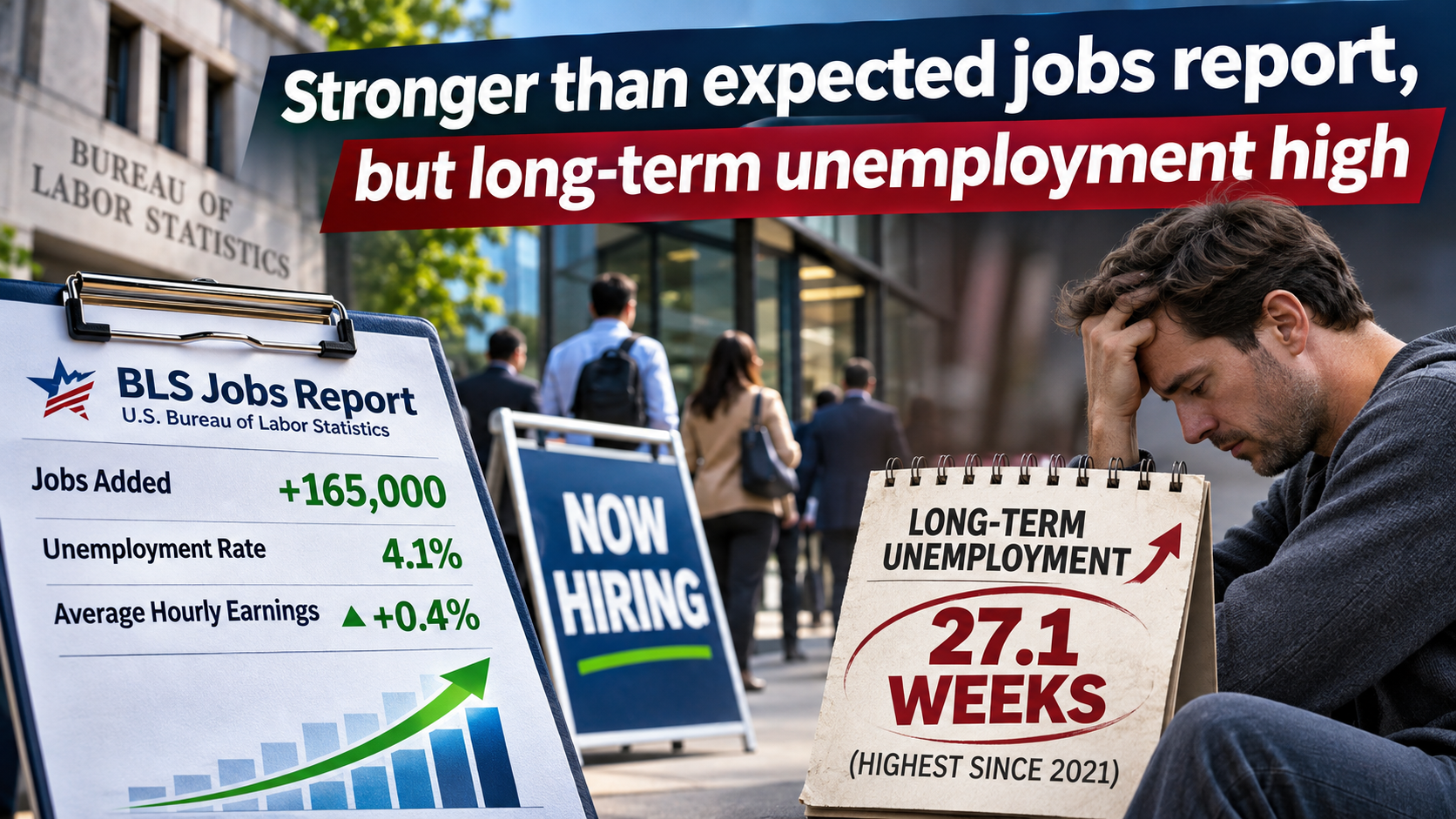

In the latest Bureau of Labor Statistics report published late last week, total non-farm payroll jobs added last month rose by 165,000, while the unemployment rate held steady at 4.1%. The better-than-expected numbers create a far rosier employment picture than analysts had been expecting, while a more encompassing measure that includes discouraged workers and those holding part-time jobs for economic reasons rose to 7.9%, up 0.3 percentage points, amassing an increase in the civilian labor force to 421,000.
Adding to the positive payroll gains for October, prior months were revised upward substantially: the numbers for August rose to 186,000, an upward revision of 53,000 jobs, while the September numbers moved upward by 31,000 for a revised gain of 60,000 jobs for the month.
“It’s a really, really good report,” said Dan North, senior economists at Allianz Trade North America. “And all around I think you’d say it’s stronger than expected and the best one in a while, and it kind of fits with what I call the stable but perhaps unexciting labor market.”
Payroll gains were also better than forecasted. Average hourly earnings increased 0.4% for the month and 3.1% annually, slightly better than the estimates of 0.3% and 2.9%, respectively. The average workweek remained at 34.4 hours.
The breadth of job growth was better as well, as professional and business services saw an increase of 70,000, leading all sectors, while healthcare accounted for an increase of 42,000 jobs. Other areas showing increases were transportation and warehousing (25,000) and manufacturing (19,000).
The news also presents an interesting backdrop with the pending Federal Reserve on the horizon. With inflation remaining stubbornly above 2%, speculation is rampant that the Board will likely bump the baseline borrowing rate by 0.50% basis point, instead of the 0.25% increase at the last two sessions.
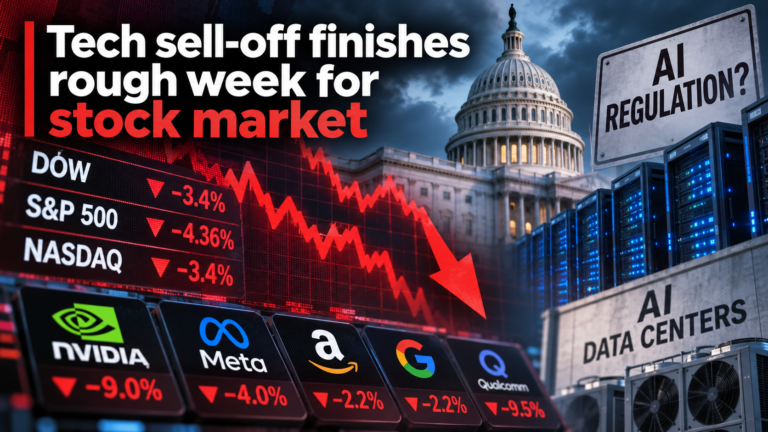
The odds of further rate hikes in 2027 have declined in recent days, following the mid-term election rout and the massive tech selloff slowing the market. The stock market was mixed at the beginning of the week, while long-term Treasury yields remain at decade-plus highs.
Labor force participation rate increased to 61.9%, as the share of individuals working in the labor force or looking for a job edged higher, after a slowdown in lieu of recent demographic changes and immigration slowdown. In October, the participation number expanded by 421,000.
If there was any blemish to the outstanding jobs report it would be the increase to the so-called “long-term unemployment” numbers. The average duration of unemployment jumped to 27.1 weeks, up 2.3 weeks from the previous month and its highest since September 2021. Those unemployed for more than 27 weeks increased to 1.96 million, the highest since December 2021.
In essence, the average jobless worker is looking at a job search of nearly seven months, the longest, outside of the pandemic era, since 2016 when the U.S. labor market was finally getting back on track after the 2008 financial crises. According to the BLS report, about 2 million Americans have been out of work for at least 27 weeks.
“This is a series that can be noisy from month to month,” said Cory Stahle, senior economist at Indeed. “But if you look over a longer time horizon, there is no mistake in the trend.”
Workers stuck in this trend are a casualty of the so-called “low-hire, low-fire” job market, in which companies are hesitant to lay workers off, but are not adding them either.
Research shows that Americans who have experienced long-term unemployment face depleted savings, lower earnings potential over time and declining mental health. Time spent unemployed may in-and-of itself reduce the probability of finding a job, as skills, supposedly, depreciate, networks diminish and employers interpret long-term unemployment as a negative sign.
Perhaps most distressing is that unemployment benefits stop after 26 weeks in a year, thus those who continue to remain unemployed are not filing for benefits, therefore the unemployment number remains static.
Still, the number of job openings came in much higher than anticipated, and the number of workers quitting jobs—a barometer of their confidence in obtaining new employment—increased to levels not seen since March 2025. The BLS also stated that layoffs and terminations dropped to their lowest volume in more than a year.
However, some high-profile layoffs may temper any notions that the job market is suddenly heating up.
Disney is planning to cut thousands of jobs, the latest in a series of layoffs this year. Microsoft, despite posting over $36 billion in profit and record quarterly revenue of $92.3 billion, is offering voluntary buyouts to 60,000 employees, roughly 25% of its global workforce. And American Express said last month that it was cutting head count by 5% as it reorientates around artificial intelligence.
As for the job elimination that was to take hold in the AI boom, the report suggests that, thus far, the U.S. is gaining jobs thanks to AI not losing them.
The largest area of growth in this jobs report was in professional and business services, and the biggest growth in that subset was the hiring of management, scientific and technical consultants, which saw their largest growth in two years.
What’s more, this workforce has grown by 45,000 over the past year, pushing the total employee base for these types of workers past 1.9 million for the first time on record, according to the BLS data.
Some economists are speculating that the jump in hiring consultants could be driven by business employing them to help adopt AI.
“The AI buildout and corporate interests to increase utilization will keep the technical consultants employed,” said Jeffrey Roach, chief economists at LPL Financial. Roach called the consulting aspect in the recent report a “bright spot worth watching”, as these jobs also saw double-digit growth in the 90s, as companies implemented new internet technologies into their businesses.
An assessment by Moody’s Analytics found that AI has created a net 786,000 jobs since ChatGPT launched in November 2022, though driven in part by data center construction.
“Wasn’t AI supposed to destroy jobs?” said Moody’s chief economist Mark Zandi. “That risk hasn’t gone away, and AI driven productivity gains could still shift into a higher gear. But for now, AI is adding to job growth, not subtracting from it.”
An increase in the hiring of temporary workers also bolstered the October report. The subsectors payroll grew by 18,600 in October, one of it’s largest month-over-month increases since 2022. Economists see temporary hiring as a lagging indicator in the labor market, as conventional wisdom suggests that those temps will be transitioned to full-time employees over time.
However, the boost in temp hiring this late in the year could be attributed to the pending holiday shopping season. Such hiring doesn’t typically happen this early, but the holiday season tends to creep up with each passing year. The BLS adjusts its numbers to account for seasonal trends but won’t immediately make an adjustment if the trend is changing.


Join the conversation