
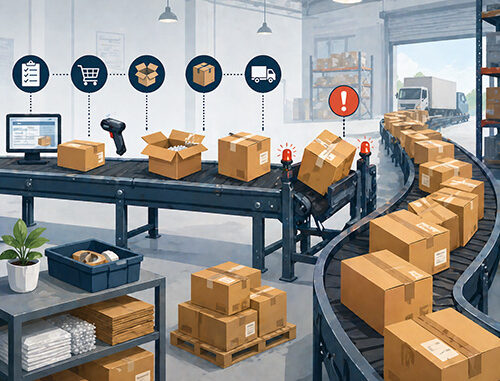

Owners usually notice early fulfillment gaps that hurt growing brands after order volume starts rising and profits do not keep pace. The trouble rarely starts with one major failure. It often starts with small misses inside picking, packing, labeling, and handoff timing that grow more expensive as daily volume climbs. If your team still relies on memory, workarounds, and quick fixes, growth will expose those weak spots before your reports do.
Order Accuracy Starts Before Packing
A lot of fulfillment mistakes start well before anything hits the packing table. Maybe someone skips a SKU note, product dimensions are outdated, or only one person knows where a certain bin is. Any of those can slow down the team and force rushed choices when things get busy.
All those small delays pile up, since every fix takes people away from getting orders out the door. If your brand is growing, focus on keeping your item data clean, making pick paths obvious, and writing instructions so clear that a new hire doesn’t have to ask around to get started.
Packing Habits Quietly Raise Cost
Packing stations might seem fine at first glance, but the problems show up when things get hectic. Maybe tape is just out of reach, the right carton is missing, or people add extra filler because they don’t trust the fit. Those little things drive up material costs and slow down output. A cluttered or badly organized station also makes it tough to spot mistakes before the box gets sealed.
Visibility Problems Create Hidden Expense
Visibility is another hidden expense. If you can’t keep track of assets or packaging inventory, you might end up ordering more containers or backup stock just to be safe. That eats up cash you could be using elsewhere.
This is where efforts to lower packaging costs with IBC container tracking fit into a broader fulfillment strategy, because better tracking helps businesses recover assets, reduce waste, and make smarter decisions before shortages disrupt operations.
Returns Often Point Back to Fulfillment
It’s easy to blame returns on product flaws or picky customers, but fulfillment mistakes are usually at the root. Sending the wrong item, using weak packaging, or missing a part all lead to replacements, extra support time, and customers who might not come back. Sometimes, a simple final check before shipping saves more money than any new marketing campaign.
Process Discipline Supports Growth
Growth comes easier when fulfillment runs like a real system, not a series of one-off fixes. Try walking through the order process yourself, from purchase to pickup. Watch where people get stuck or have to improvise, then focus on fixing the spot that causes the most headaches before tackling the rest.
Once you treat early fulfillment gaps that hurt growing brands as an operations issue rather than a growth side effect, the fixes become clearer, and the results are easier to protect.