
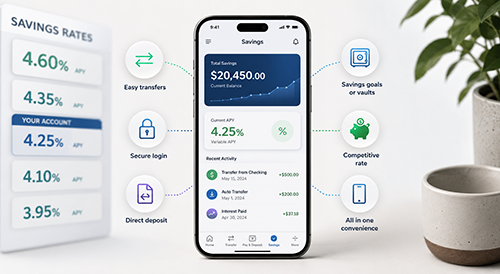

People focus on the savings account with the highest APY.
It makes sense. The rate is easy to compare, and earning more interest sounds like the smart decision.
The issue is that savings rates can change overtime. The account sitting at the top of a rate table today could be in the middle of the pack a few months from now and vice versa.
Meanwhile, the login, transfer process, deposit requirements and account tools are what you will live with every week. Love them or hate them.
That is why I think people should choose a savings account based on how they manage money, with the rate being one part of the decision.
Put the Rate Difference Into Dollars
Before making a decision, calculate what the higher rate will earn based on the balance you plan to keep.
If one account pays 0.25% more and you maintain a $20,000 balance, the difference comes out to around $50 over a year, assuming the rates and balance stay the same.
Would I switch accounts for another $50?
Maybe. If both accounts work the same way and neither has fees or additional requirements, it could be worth it. Especially if one is offering a sign-up bonus.
I would probably stay where I am if earning that extra $50 means changing direct deposit, opening another app, remembering another password and keeping track of requirements each month.
There is a cost to managing another financial account. It may not show up as a line item, but you pay for it with your time and attention. Which these days, feels like those are always in short supply.
Why I Use American Express
Case in point, I use the American Express High Yield Savings Account because I already have American Express credit cards.
My cards and savings account are accessible through the same app.
Which makes my financial life a little easier, even if I’m not getting the highest APY.
American Express may not have the highest rate but for me, however, earning a competitive rate while keeping everything in a system I already use is more valuable than chasing every small change in APY.
Someone who does not use American Express cards may come to a completely different conclusion and that’s the point, find the right account for you.
My Family Uses Savings Accounts Differently
Members of my family use SoFi Checking and Savings.
They originally liked the account because they earned a cash bonus and could get paid up to two days early through direct deposit.
The feature they continue using is Savings Vaults.
One family member has a Vault for vet bills for their senior dog. They also use separate Vaults for emergencies, travel and Christmas.
Technically, the money is sitting within the same savings account. Mentally, each dollar already has a job.
That matters because a large savings balance can sometimes make you feel like you have more available money than you do.
Breaking it into goals helps prevent money saved for a vet bill or Christmas from getting spent on something else.
The Vaults would not add much value for someone who prefers one savings balance and tracks goals in a spreadsheet. For my family, they help keep the plan organized.
Start With the Job of the Money
Before comparing accounts, decide what the money needs to do.
- An emergency fund needs to remain accessible.
- Money for a trip or annual bill may benefit from being separated into different goals.
- Someone building a large cash reserve may care more about earning the best available rate on the full balance.
Then look at what you must do to earn the advertised APY.
- Does the account require direct deposit?
- Is there a minimum monthly deposit?
- Does the higher rate only apply to part of the balance?
- Will a monthly fee eat into the extra interest?
Those details tell you more than the number at the top of the page.
My American Express account works for me. SoFi works for members of my family.
Neither experience proves that those accounts will be the best fit for you. You may care more about branch access, ATM availability, customer service or getting the highest available rate.
Our high-yield savings account page can help you compare those options.
Start with the rate to build your list. Then pick the account that fits the way you already save and manage your money.

Be the first to comment