
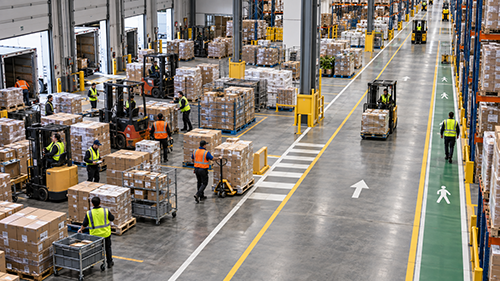

A busy distribution center needs constant movement to keep orders on schedule and customers satisfied. However, higher order volumes can quickly create traffic problems when workers and equipment compete for limited space. Congestion slows operations and can make everyday tasks harder than they need to be.
Small and medium-sized businesses often feel these problems as they grow because their facilities may need to handle volumes that exceed the original design. Rather than immediately adding more square footage, owners can improve how their existing space functions.
When businesses understand how to reduce congestion in high-volume distribution centers, they can improve business operations and avoid delays. A few targeted operational changes can create smoother movement and support continued growth.
Identify Where Traffic Starts to Build Up
Reducing congestion starts with finding the areas where traffic repeatedly slows down. Managers should observe normal operations during peak periods instead of evaluating the facility only during quieter hours. Receiving docks, picking zones, packing stations, and shipping areas often reveal problems when activity is at its highest.
Look beyond obvious traffic jams and measure how delays affect surrounding operations. A forklift waiting for an open aisle may prevent another employee from reaching inventory, while backed-up pallets can restrict access to nearby workstations. Tracking these patterns helps managers address the cause instead of repeatedly dealing with symptoms.
Create Clear Paths for People and Equipment
Workers and material-handling equipment need predictable travel routes throughout the facility. When pedestrians, forklifts, pallet jacks, and carts constantly cross the same areas, even a relatively spacious distribution center can feel crowded. Clear routes reduce unnecessary conflicts and make movement easier to anticipate.
Floor markings and designated travel lanes can help employees understand where they should walk or operate equipment. Managers should also keep frequently used routes free from temporary storage. A pallet that sits in an aisle for only an hour can still disrupt dozens of trips during a high-volume shift.
Reconsider the Placement of High-Demand Inventory
Fast-moving products create more warehouse traffic because employees need to access them frequently. If workers must travel deep into the facility every time they retrieve popular inventory, those repeated trips can place unnecessary pressure on major aisles. Strategic product placement reduces this travel.
Place high-demand products where employees can reach them without crossing several busy operational zones. Owners should review product velocity regularly because demand changes over time. A storage plan that worked six months ago may create bottlenecks today if purchasing patterns have shifted.
This process demonstrates how warehouse layout can improve efficiency without requiring a larger building. Better placement shortens travel distances and distributes activity more effectively. It also helps businesses get more practical value from the space they already pay to operate.
Keep Staging Areas Under Control
Staging areas support efficient receiving and shipping, but they can become congestion points when inventory remains there too long. Incoming products may pile up while employees wait to put them away, or completed orders may occupy valuable floor space long before a truck arrives.
Managers should establish clear limits for what can enter each staging area and how long materials can remain there. Scheduling inbound and outbound activity more carefully can also reduce sudden surges. When teams move inventory through staging areas consistently, those spaces support flow instead of restricting it.
Adjust Aisles to Match Actual Operations
Aisle design should reflect the equipment and processes employees actually use. An aisle that technically accommodates a forklift may still cause delays if operators have little room to turn, retrieve pallets, or pass nearby activity. Small inefficiencies become much more noticeable as daily volume rises.
Business owners should evaluate aisle widths alongside rack configuration and equipment dimensions. Wider does not automatically mean better because unnecessarily large aisles consume valuable storage space. The goal is to create enough clearance for efficient movement while preserving practical storage capacity.
Pay particular attention to intersections. Employees often slow down at blind corners or heavily traveled crossings, which can cause traffic to accumulate behind them. Better visibility and thoughtful routing can help equipment move through these areas with fewer interruptions.
Reduce Unnecessary Inventory Movement
Every unnecessary product movement adds traffic to a distribution center. When employees repeatedly relocate pallets because storage locations do not match operational needs, forklifts spend more time on the floor without increasing actual output. Better inventory planning can eliminate much of this activity.
Businesses can focus on several practical improvements:
- Assign logical storage locations before incoming shipments arrive.
- Reduce temporary pallet placement in active travel lanes.
- Keep frequently paired products reasonably close together.
- Review slow-moving inventory that occupies valuable locations.
- Coordinate replenishment with lower-traffic periods when possible.
These changes help employees complete necessary work with fewer trips. They also reduce the number of forklifts and pallet jacks competing for aisle space during the busiest portions of the day.
Coordinate Receiving and Shipping Schedules
Congestion often develops because too much activity happens at once. Several inbound trucks arriving while employees prepare a large group of outbound orders can overwhelm dock areas. Even an efficient team will struggle when scheduling creates more traffic than the facility can comfortably handle.
Spreading appointments across available operating hours can create a steadier workload. Managers should compare carrier schedules with internal picking, packing, and replenishment activity. Better coordination allows the facility to use docks and staging areas more consistently rather than cycling between long quiet periods and sudden traffic spikes.
Small and medium-sized businesses can benefit significantly from this approach because it often requires little capital investment. Better scheduling relies on communication and planning rather than expensive facility changes. It can produce noticeable improvements quickly when inconsistent dock activity drives congestion.
Use Data to Find Hidden Delays
Employees may recognize obvious bottlenecks, but operational data can reveal problems that managers cannot easily see from the warehouse floor. Travel times, order cycle times, equipment utilization, and picking activity can show where processes repeatedly lose momentum.
For example, longer picking times in one zone may indicate more than an inventory problem. Workers might wait for equipment to pass or take indirect routes around temporary storage. Comparing performance across different shifts can help managers determine whether the issue comes from facility design, scheduling, or work practices.
Businesses do not necessarily need complicated software to begin this process. Basic operational records can provide useful information when managers review them consistently. The important step involves turning observations into measurable patterns and then using those patterns to guide improvements.
Build Congestion Control Into Growth Plans
Distribution centers that reduce congestion can run smoothly at one order volume may struggle after the company grows. Owners should therefore treat traffic management as an ongoing operational responsibility rather than a one-time project.
Regular facility reviews can catch developing problems before they become major bottlenecks. Managers should examine storage usage, travel patterns, staging needs, and dock activity whenever order volume changes significantly. Early adjustments often cost less and cause less disruption than major corrections later.
Reducing congestion ultimately comes down to controlling how everything moves through the facility. An efficient distribution center gives a growing company more room to handle higher volumes while maintaining reliable service.
Be the first to comment