


Entrepreneurs are masters of strategic thinking. They build detailed business plans, craft meticulous exit strategies for their companies, and develop comprehensive succession plans for their organizations. Yet when it comes to planning their own career transitions and personal financial succession, many successful business leaders find themselves surprisingly unprepared. This paradox represents one of the most overlooked aspects of entrepreneurial success: the failure to apply the same strategic rigor to personal career planning that they demand in their business operations.
The Strategic Disconnect
After founding and successfully selling ResumeDirector and ResumeArrow to LiveCareer in 2011, I experienced this disconnect firsthand. While I had meticulously planned the exit strategy for my businesses, I hadn’t given nearly enough thought to what came next for my own career trajectory. This experience taught me that entrepreneurs often suffer from a blind spot: they’re so focused on building and exiting their current venture that they neglect to plan for their own professional evolution.
The irony is striking. Business leaders who wouldn’t dream of operating without a five-year strategic plan often navigate their personal careers with little more than vague intentions. They invest countless hours developing succession plans for key employees but spend minimal time considering their own succession from entrepreneurial roles to whatever comes next.
The Unique Challenges Entrepreneurs Face
Identity Crisis Beyond the Business
When your identity becomes deeply intertwined with your company, stepping away becomes more than a business decision—it becomes an existential challenge. Unlike traditional employees who may view career changes as natural progressions, entrepreneurs often struggle with the question: “Who am I without my business?”
This identity crisis is compounded by the fact that entrepreneurial success often comes with significant lifestyle changes. The freedom, control, and financial rewards of business ownership create a unique set of expectations that can be difficult to replicate in traditional employment or even in subsequent ventures.
The Skills Translation Gap
Many successful entrepreneurs possess highly specialized skills that don’t always translate directly to other opportunities. The ability to bootstrap a startup, navigate early-stage funding, or pivot a business model are valuable competencies, but they may not align with the requirements of corporate leadership roles or other career paths.
Financial Complexity
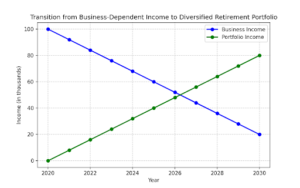
Entrepreneurial wealth is often illiquid and tied directly to business assets. Unlike salaried employees who can rely on predictable retirement contributions and benefits, entrepreneurs must navigate complex financial planning scenarios that include business valuations, tax implications of exits, and the challenge of diversifying wealth that’s concentrated in a single venture.
Learning from Business Exit Strategies
The most successful entrepreneurs can overcome these challenges by applying the same strategic frameworks they use for business succession to their personal career planning.
Develop Multiple Scenarios
Just as businesses plan for various exit scenarios—strategic acquisition, private equity sale, IPO, or management buyout—entrepreneurs should develop multiple career transition scenarios. These might include:
- Transitioning to advisory or board roles
- Moving into venture capital or angel investing
- Pursuing corporate executive positions
- Starting new ventures in different industries
- Focusing on philanthropy or social impact work
Create Value Beyond Equity
Smart business succession planning involves building systems and teams that can operate independently of the founder. Similarly, personal succession planning requires developing value that extends beyond your current business. This includes:
- Building a personal brand that transcends your current company
- Developing a network that extends beyond your immediate industry
- Cultivating expertise that’s transferable across sectors
- Establishing thought leadership through writing, speaking, or teaching
The Financial Foundation of Personal Succession
Diversification as Risk Management
One of the most critical aspects of entrepreneurial succession planning is financial diversification. While it’s tempting to reinvest everything back into the business, successful transition requires building wealth outside of your primary venture. This might include:
- Regular investment in index funds or diversified portfolios
- Real estate investments
- Alternative investments like commodities or cryptocurrency
- Building multiple income streams through consulting or advisory work
Understanding Your Financial Timeline
Unlike traditional retirement planning, entrepreneurial succession planning must account for the unpredictable nature of business cycles and exit opportunities. This requires:
- Stress-testing your financial plan against various business scenarios
- Building larger cash reserves to weather uncertain transition periods
- Planning for potential tax implications of business sales or transitions
- Considering the impact of market cycles on exit timing and valuations
Building Your Personal Board of Directors
The Advisory Imperative
Just as businesses benefit from strong boards of directors, entrepreneurs need personal advisory networks to help navigate career transitions. This personal board should include:
- Financial advisors who understand entrepreneurial wealth planning
- Career coaches with experience in executive transitions
- Mentors who have successfully navigated similar transitions
- Peers who are facing or have faced similar challenges
Professional Development Investment
Many entrepreneurs become so focused on building their businesses that they neglect their own professional development. Successful succession planning requires ongoing investment in:
- Leadership development programs
- Industry knowledge outside your current sector
- Network expansion beyond your immediate business circle
- Skills development that supports your transition goals
The Timing Challenge
Starting Early
One of the biggest mistakes entrepreneurs make is waiting until they’re ready to exit before beginning succession planning. The most successful transitions begin years before the actual exit, allowing time to:
- Build the necessary financial foundation
- Develop transferable skills and expertise
- Expand professional networks
- Explore potential career paths
- Address any gaps in experience or knowledge
Market Awareness
Just as business exit timing depends on market conditions, personal career transitions must consider broader economic and industry trends. This includes:
- Understanding which skills and experiences are in highest demand
- Recognizing emerging opportunities in new industries or roles
- Timing transitions to align with favorable market conditions
- Building flexibility to adapt to changing circumstances
Technology and the Changing Landscape
The digital transformation of business has created new opportunities and challenges for entrepreneurial succession planning. Remote work has expanded the geographic scope of opportunities, while technology has created entirely new career paths that didn’t exist a decade ago.
My own transition from resume distribution services to market research platforms, and eventually to financial advice through MintWit, illustrates how technological change can create unexpected opportunities for career evolution. The key is maintaining awareness of technological trends and their potential impact on future opportunities.
Common Pitfalls to Avoid
The “One More Year” Trap
Many successful entrepreneurs fall into the trap of repeatedly postponing their transition because business is going well. While this might maximize short-term financial returns, it can lead to missed opportunities and increased risk if market conditions change.
Neglecting Personal Interests
Career transitions provide an opportunity to align professional activities with personal interests and values. Entrepreneurs who focus solely on financial optimization may miss opportunities for more fulfilling career paths.
Underestimating Transition Time

Career transitions typically take longer than expected. Whether moving into corporate roles, starting new ventures, or pursuing other opportunities, the process of finding the right fit often takes months or even years.
Creating Your Action Plan
Assessment and Goal Setting
Begin by conducting an honest assessment of your current situation:
- Financial position and diversification needs
- Skills and experience gaps
- Network strength across different industries
- Personal interests and values alignment
- Timeline and flexibility requirements
Implementation Strategy
Develop a concrete plan with specific milestones:
- Financial milestones: Diversification targets, savings goals, and investment allocations
- Professional development goals: Skills to develop, programs to complete, and experiences to gain
- Network expansion targets: Specific relationships to build and maintain
- Exploration activities: Industries to research, roles to investigate, and opportunities to pursue
Regular Review and Adjustment
Like any strategic plan, your succession strategy should be regularly reviewed and updated based on changing circumstances, market conditions, and personal priorities.
The Long-Term Perspective
Successful entrepreneurial succession planning requires adopting a long-term perspective that extends well beyond the immediate business cycle. This means thinking not just about the next exit, but about the entire arc of your career and how different phases can build upon each other.
The entrepreneurs who navigate these transitions most successfully are those who approach their personal succession planning with the same strategic rigor, long-term thinking, and systematic execution that they bring to their businesses. They recognize that career succession is not a single event, but an ongoing process that requires continuous attention and refinement.
Conclusion
The entrepreneurial journey doesn’t end with a successful business exit—it evolves into new chapters that can be equally rewarding with proper planning. By addressing the succession planning blind spot and applying proven business strategies to personal career development, entrepreneurs can ensure that their professional success extends far beyond their current venture.
The key is recognizing that personal succession planning is not a luxury to be considered after achieving business success—it’s a strategic imperative that should begin early and continue throughout your entrepreneurial journey. Those who master this discipline will find themselves not just financially prepared for transition, but positioned to create value and find fulfillment in whatever comes next.
The most successful entrepreneurs understand that their greatest creation isn’t just their business—it’s a career and life that continues to generate value, satisfaction, and impact long after any individual venture has run its course.
