
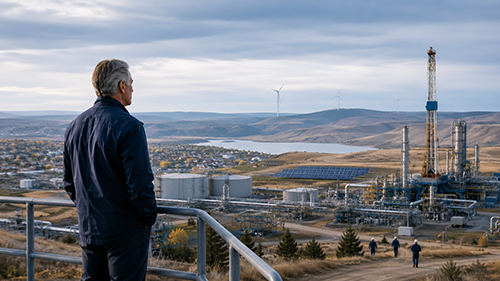

Oil and gas have been the driving force behind global development for more than a hundred years. The two have not only facilitated growth in different sectors but also contributed to the rise of modern-day civilization. However, the sector is now going through, perhaps, one of the deepest and most-radical changes in history; one that affects the energy sources as well as the concept of leadership in the industry.
True leadership in the oil and gas sector has changed and is not characterized by production output alone. Presently, it incorporates such elements as vision, responsibility, and the willingness to be patient and go for the long term, even if it means sacrificing short-term profits. Leaders who stand out are able to grasp that success should not be evaluated only by barrel counts and balance sheets; however, they should be valued in terms of trust, creativity, and the impact they make on the future.
The New Expectations of Energy Leadership
Leadership in the energy sector used to revolve around possessing skills in operations, such as efficient resource extraction, cost reduction, and scaling production. These skills are still important; however, the world now demands additional qualities in leaders.
From Managing Assets to Shaping Impact
Energy executives are required to lead with both technical and moral clarity. Their decisions impact their companies plus the whole range of economies, societies, and nature.
Modern leadership now means:
- Balancing profit with purpose. Investors and consumers expect companies to align growth with responsibility.
- Championing innovation. Some technologies, like automation, data analytics, and carbon capture, are no longer optional—they are the foundation of future competitiveness.
- Building credibility. Transparency about operations, emissions, and community engagement has become a non-negotiable part of reputation management.
The energy industry is no longer isolated from the public eye. Every decision is visible, measurable, and increasingly accountable.
Leadership-Beyond-Business Metrics
Expanding leadership beyond business is a strategic move. The ability to connect financial performance to both environmental and social awareness defines which companies endure and which fall behind.
Trust as the Cornerstone of Progress
Trust cannot be built in one day. It is a continuous process that takes time and effort to develop. In an industry where scrutiny is constant, your honesty and dialogue are the factors that determine your reputation.
By being honest about your successes and failures, you grant your stakeholders’ trust. Be it through the communication of environmental objectives or the admission of a setback, being transparent shows courage and earns long-term respect.
In times of uncertainty, people remember the leaders who told the truth. That’s what creates resilience; not perfection, but consistency.
Innovation as a Form of Responsibility
Innovation today is less about doing more and, instead, more about doing better. As an energy leader, you’re doing more than chasing higher output. You’re rethinking what efficiency means in a changing world.
Every new technology you adopt from predictive maintenance that prevents downtime, like real-time sensors that detect leaks before they happen, is a step toward a more intelligent and responsible production process.
When you encourage your team to experiment, to question outdated habits, and to regard technology as an upgrade rather than a disruption, you create an atmosphere that drives progress. Innovation, after all, is your contribution to the industry’s integrity.
Sustainability as Competitive Advantage
Sustainability represents a sign of being ready for the future. It is no longer only profit that investors, regulators, and consumers are considering when they evaluate your company, but more so your purpose.
By embedding sustainability as part of your business strategy, you will also be a step ahead of the competition. Cutting emissions, saving water, and installing green energy are all sustainability measures that will lead to better and more efficient operations. Plus,investor trust will deepen and your brand will gain credibility in an era defined by transparency.
Your sustainability measures become your protection in an industry where reputation is key. They form the moat around your business; one built not from protectionism, but from progress.
Leading Through People
The most effective leaders understand that energy is ultimately a people business. Behind every pipeline, refinery, or digital system are individuals who ensure its success.
Safety and Accountability
Safety is not merely a metric of compliance; it mirrors the honesty of your leadership. A culture that values the protection of life and health is the one where excellence flourishes. People who trust their wellbeing comes first are those who raise their hand when something looks wrong. The practice of open communication, continuous learning, and reporting proactively changes safety from an obligation to an identity. A strong safety center that comes into being is a testimony to your operational discipline, and it is one of the first things investors and regulators read into when they are measuring the health of your company.
Investing in Talent
With the rapid acceleration in technology, the ability to adapt has to accompany technical knowledge. The future energy workforce will consist of individuals with equal proficiency in engineering and data, sustainability, and innovation. Empowering employees through mentorship, training, and career progression makes them more than ready for change. It also makes the organization more resilient in a volatile market.
Collaborating with Communities
A genuine partnership means giving back. It could be through teaching programs, employing local residents, and environmental restoration, or any other way the people in the community can get involved. Once communities share the benefits of production, they turn into allies in development for the long haul. That kind of social license is the practical foundation that allows projects to keep moving forward. Losing it can affect operations much more than market shifts can. Community trust is as much an asset as any pipeline can be.
Rethinking Success
The focus of leadership in oil and gas has been focused on efficiency and profitability. However, long-term success now relies on a more extensive equation—one that combines people, planet, and performance.
The Triple Bottom Line
- Profit: Investor confidence is based on operational discipline and smart growth, but they mean little without purpose.
- People: When you prioritize safety, development, and inclusion, you inspire loyalty and spark innovation that no system alone can deliver.
- Planet: Proper resource management assures the social license of the industry and the reputation of your company among an increasingly eco-conscious public.
Companies that manage this balance are not sacrificing profitability, they’re securing it. If your efforts are centered on resilience and accountability, you will have the power to easily draw in long-term investors, retain outstanding staff, and gain the trust that keeps your organization relevant through change.
Principles for the Next Generation of Leaders
If you’re stepping into a leadership role—or preparing for one—the energy landscape ahead will demand more than technical skill. It will call for clarity of values and consistency in action.
Consider these principles as a compass in your development:
- Lead with integrity. Your credibility is your strongest asset. Every decision either strengthens or erodes it.
- Embrace adaptability. Markets shift, technologies evolve, and regulations tighten. Your ability to pivot determines your longevity.
- Value collaboration. The energy transition can’t be solved in silos. Partnerships across oil, gas, renewables, and technology will define real progress.
- Stay people-centric. Machines extract resources, people drive innovation. Empowering your teams ensures sustainable performance.
- Focus on legacy. Leadership is temporary. The influence you leave on people, on the planet, and on the industry, is what truly lasts.
When leaders understand the success of their businesses as part of a bigger ecosystem, which takes into account community well-being and environmental balance—they not only adjust to the future but also determine its course.
Building Leadership That Lasts
The transition to renewable energy all over the world will span decades. Despite this, the oil and gas industry will continue to play an important role, yet how the industry operates will decide whether it is linked with a progressive or a resisting era.
True leadership that goes beyond the industry recognizes that profitability and responsibility are not the opposite sides of the coin but depend on each other. The aim is not to eliminate fossil fuels but to evolve them thoughtfully so that growth today doesn’t compromise tomorrow’s resources.
Those who lead with vision, empathy, and responsibility will be able to maintain their companies and to rewrite the definition of leadership in the 21st-century energy economy.
FAQs
- What reasons are there for leadership in the oil and gas sector to change?
The sector is under heavy public scrutiny, experiencing environmental pressure, and undergoing a radical technological change. The leaders of today must be able to balance business results with sustainable impact.
- What sustainable solutions can improve a company’s performance?
Sustainable practices have positive effects on the company’s profitability in the long run. They result in higher efficiency, provide better access to ESG-natured investments, and reduce operational risks.
- What role does innovation play in responsible energy production?
Innovation allows companies to use more-secure, cleaner, and efficient operations that, in turn, let them emit less, avoid accidents, and continue to stay competitive even when the market is changing.
- How can smaller energy firms apply these leadership principles?
Start with what’s local: Strengthen safety programs, build transparency, invest in workforce development, and engage directly with nearby communities.
- What defines lasting leadership in today’s energy sector?
Integrity, adaptability, and purpose. The leaders who succeed are those who combine operational strength with social awareness and long-term vision.

Be the first to comment